


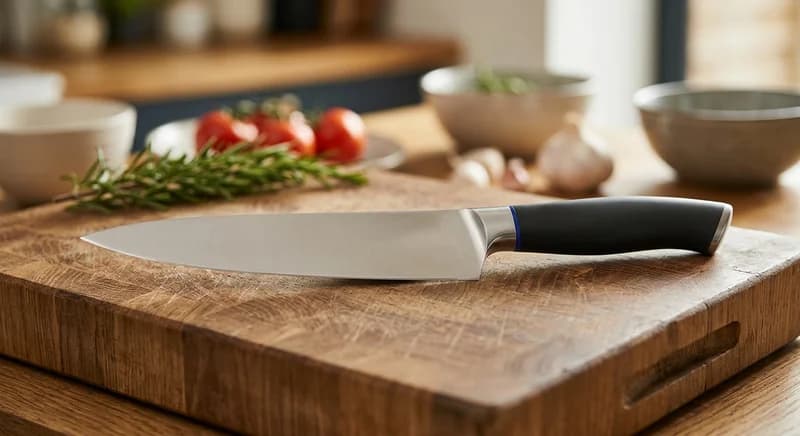


Why the right kitchen knife changes everyday cooking
A kitchen knife is not just another drawer tool. It shapes how fast you prep, how neat ingredients look, and how calm your hands feel after ten minutes at the board.
When a blade suits the task, carrots split with a crisp snap, herbs stay bright instead of bruised, and onions fall into even cubes. That matters in British home kitchens, as weeknight cooking often means quick chopping, slicing, and trimming in one session.
This collection focuses on the full range of kitchen knives for everyday meal prep. That helps you compare blade styles in one place, as most home cooks need more than one cutting solution. Which shapes actually earn their space in a real kitchen?
How to choose the best kitchen knives for home cooking
Start with what lands on your chopping board most often. A knife that feels brilliant for crusty bread may feel awkward on tomatoes, while a slim paring blade may feel too small for cabbage or squash.
The best kitchen knives for home cooking usually balance three things. Blade purpose, edge feel, and handle comfort. When those work together, prep feels smoother and more controlled.
Choose by task, not by looks
- Chef knife for all round chopping and rocking cuts, as it handles vegetables, herbs, and meat with one steady motion.
- Paring knife for peeling, trimming, and small detail work, as a shorter blade gives closer control in the hand.
- Bread knife for crusty loaves and soft cakes, as a serrated edge grips the surface instead of crushing it.
- Slicing knife for cooked meat and larger cuts, as a longer blade creates cleaner, neater strokes.
- Utility knife for in between tasks, as it bridges the gap between larger and smaller blades.
If you are building a practical setup, a chef knife, paring knife, and bread knife often cover most daily prep. That is usually smarter than choosing a huge block filled with pieces that rarely leave the counter.
Pay attention to handle feel
Ergonomic kitchen knives for easy chopping matter more than many shoppers expect. A balanced handle feels secure, settled, and natural in the palm, as poor grip shape can make even a sharp blade feel clumsy.
Look for a handle that stays comfortable through repeated chopping. You want control you can feel, not just a polished look in product photos.
Do not ignore steel and grind
Many shoppers search for stainless steel kitchen knives UK options and assume they all cut alike. They do not, as thickness, edge angle, and grind shape all affect how the blade moves through food.
A thinner blade often slips through onions and peppers with less resistance. A sturdier blade can feel more reassuring on dense produce. The difference shows up in the sound and feel of prep, from a clean tap on the board to a smoother forward glide.
Best knife types for common home cooking tasks
For vegetables and herbs
Sharp kitchen knives for vegetables and meat should still feel nimble on delicate ingredients. For peppers, onions, courgettes, and herbs, a chef knife is often the most useful choice, as it gives enough length for efficient slicing without feeling oversized.
You see cleaner cuts, hear less scraping, and feel less drag through the board. That means fresher looking ingredients and a more satisfying rhythm while cooking.
For meat and poultry
If you trim chicken, portion beef, or slice cooked roasts, look for kitchen knives for precise slicing with a stable grip. A chef knife can cover much of this work, while a slicing knife helps with longer, cleaner cuts, as the extended blade reduces repeated sawing.
That cleaner motion helps meat keep its shape on the plate. It also makes prep feel more confident and less tiring.
For bread and soft foods
A serrated bread knife earns its place quickly. It bites gently into crust, tomatoes, and pastries, as the toothed edge grips slippery or firm surfaces without flattening the middle.
If toast, sandwiches, and fresh loaves appear often in your kitchen, this is not a decorative extra. It is a daily helper. And there is one more overlooked blade type many home cooks regret skipping.
Costly mistakes to avoid when choosing kitchen knives
Some mistakes look harmless at first. Then they turn every meal into slower, messier prep. Avoid these common traps before you choose.
- Choosing a large set with unused pieces, as clutter does not improve cutting and often wastes money and space.
- Picking by appearance alone, as a striking finish cannot replace the right blade shape for the job.
- Ignoring balance and grip comfort, as hand fatigue builds fast during longer chopping sessions.
- Assuming all stainless steel knives cut the same, as steel quality and edge geometry change performance dramatically.
- Using one knife for everything, as bread, herbs, meat, and peeling all reward different blade designs.
A kitchen knife set for daily cooking can still be a strong choice. Just make sure the set reflects your real routine rather than a showroom fantasy.
How to build a smart everyday knife setup
For most households, three knives create a flexible starting point. A chef knife, a paring knife, and a bread knife. That combination covers most chopping, trimming, peeling, and slicing without crowding the drawer.
If you cook often, add a slicer or utility knife next. This approach works well for affordable kitchen knives from the Chinese marketplace, as you can compare shapes and functions before choosing extra pieces.
You can also pair this category with other practical prep tools. Explore kitchen utensils for everyday cooking support, kitchen utensils sets for coordinated basics, and kitchen scales for more accurate baking and portioning.
If your routine includes fast veg prep, take a look at vegetable choppers. For tidier leftovers and batch cooking, see food storage containers. To keep counters calmer and drawers easier to manage, browse kitchen organisers and kitchen gadgets.
Many shoppers on the Chinese marketplace start here, then build around their cooking habits. On AliExpress UK, that makes it easier to choose for real life rather than guess from a polished picture. The wider platform gives you room to compare without rushing.
What makes a knife feel worth choosing
The right knife feels steady when it lands in your hand. It moves with a clean, quiet confidence through onions, herbs, and roast meat. You spend less time correcting uneven cuts and more time enjoying the flow of cooking.
That is why best chef knives for home cooks are not only about sharpness. They are about control, comfort, and the small satisfaction of seeing ingredients line up neatly on the board.
Across AliExpress and the wider Chinese marketplace, the strongest choices are the ones that match your habits closely. Choose the blade types you will actually reach for, and prep starts feeling faster, cleaner, and far more rewarding.