











Compact cloning for 125KHz access systems
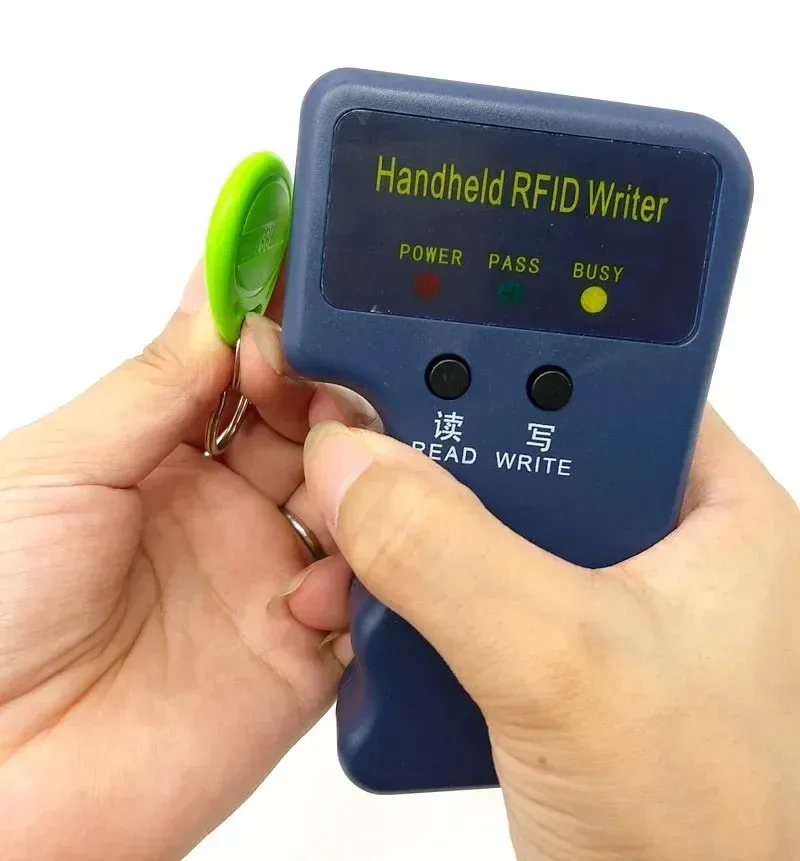
This handheld copier solves a simple problem: backing up a 125KHz access card without dealing with bulky desktop programmers. 5YOA has a solid reputation in the AliExpress UK niche for making practical RFID tools that stay focused on one job, and this unit follows that pattern with a stripped-back, easy-to-carry format.
The body is small enough to slip into a tool pouch, yet the controls stay simple enough for quick field use. If you only need to duplicate EM4100-style credentials onto rewritable tags, the device’s minimal layout is part of the appeal, so what does that mean in day-to-day use?
What the read and write workflow means in practice
The two-button design keeps the process direct: read the original card, then write that data to a compatible rewritable tag. That matters because EM4100 and TK4100 are read-only, so the copier is really a bridge between a fixed original and a T5577 or EM4305 target.
Users who reported success in reviews mostly describe the same result: the unit works cleanly with 125KHz tags and feels more capable than its toy-like shell suggests. The lightweight plastic housing is not premium, but it helps keep the tool portable and easy to handle during quick access-control tasks.

Why T5577 and EM4305 compatibility matters
This model is not a universal RFID wizard, and that limitation is exactly what makes it easier to understand. It is designed around 125KHz EM4100-type systems, so if your lock, fob, or entry badge uses another frequency, this is the wrong tool.
For the right use case, though, the compatibility story is strong because rewritable tags are inexpensive and widely available. That low-friction pairing makes the copier useful for backups, spare fobs, or testing access credentials before you commit to a permanent setup, but how reliable is the power side?
Battery-powered portability and what to watch for
The handheld format usually runs on two AAA batteries, which keeps it independent from USB cables and workbench clutter. That makes it convenient for on-site access-control work, although it also means battery quality matters more than on mains-powered programmers.

One recurring weak point is consistency between units, with a small number of customers reporting a dead-on-arrival device. The positive side is that the review pool is still strongly favourable overall, so the quality picture looks good for a budget tool, provided you check power and tag compatibility first.
Who gets the most from it
This is best suited to technicians, landlords, and hobby users who already know their system is 125KHz-based. It is less suitable for mixed-frequency environments or anyone expecting NFC phone support, because the value here comes from focused cloning rather than broad feature depth.
For a very low asking cost, it delivers a surprisingly practical combination of portability, simple operation, and purpose-built RFID duplication. The real question is not whether it is elaborate, but whether it solves your specific access-card task without wasting time, and in the right setup it clearly does.