








Why the M800 makes everyday evidence capture easier
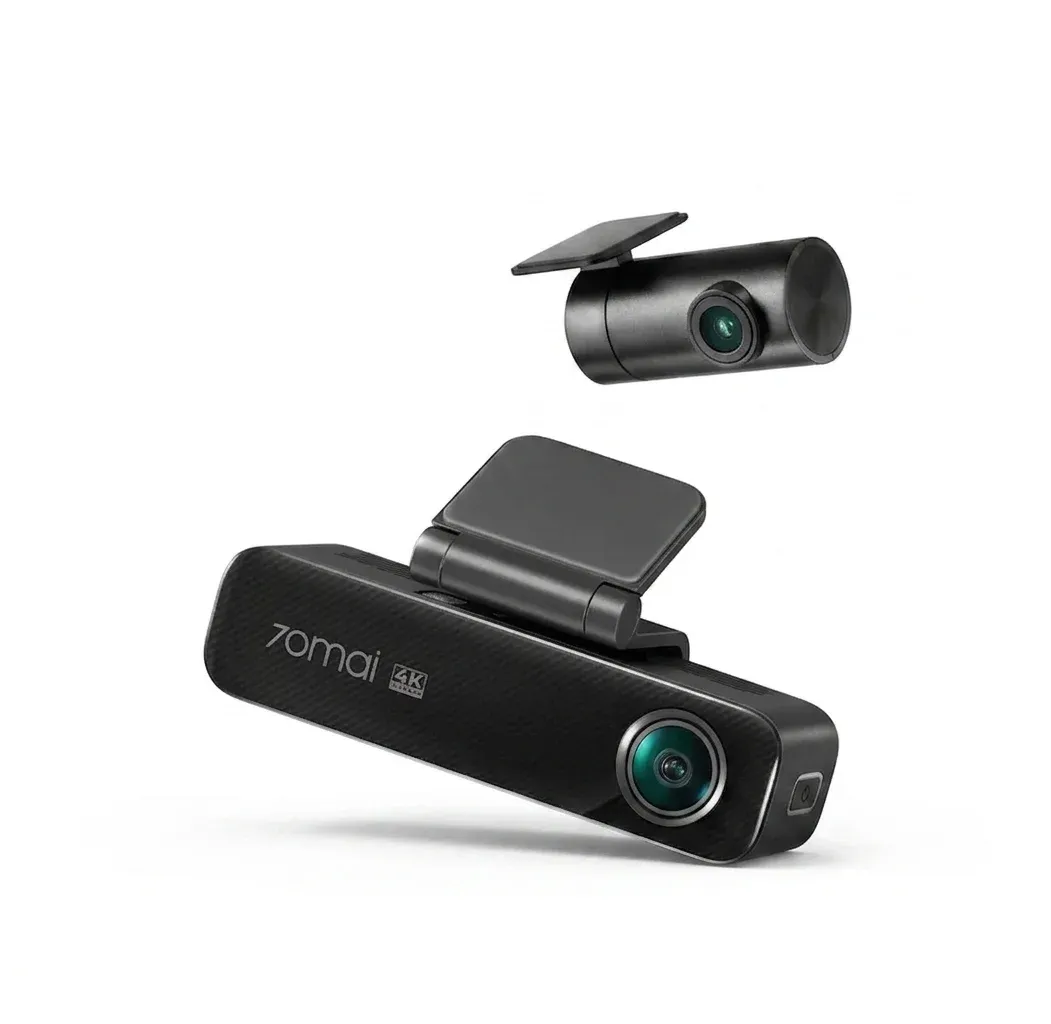
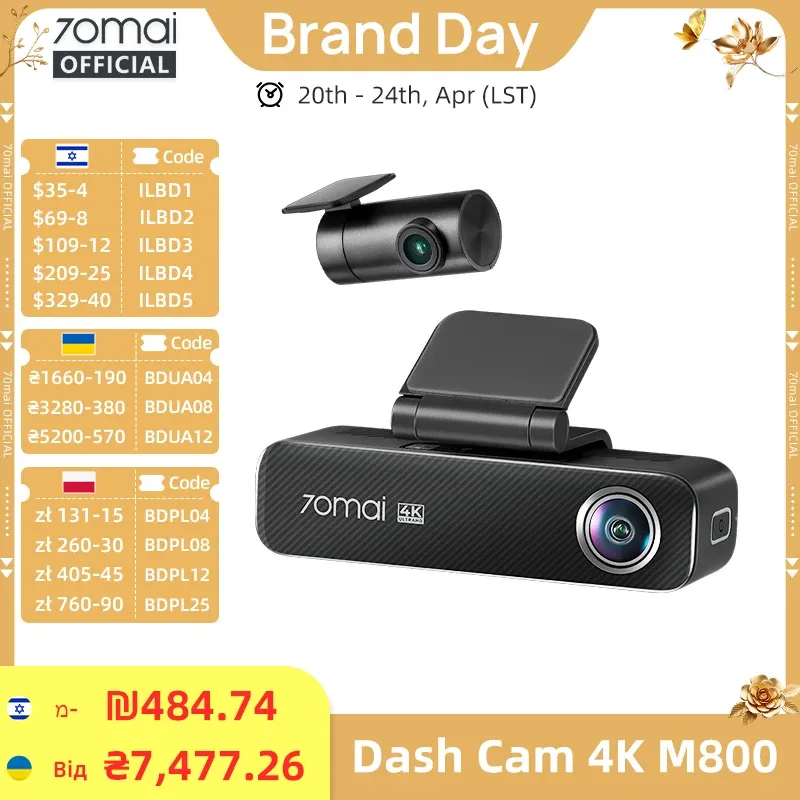
The main problem this dash cam solves is simple: you want reliable incident footage without juggling memory cards or a cluttered setup. The 70mai M800 answers that with built-in 128GB eMMC storage, so the camera is ready to record from the moment it is installed.
That matters in the AliExpress UK market because many drivers want a cleaner, lower-maintenance setup than a card-based recorder. The absence of a screen also keeps the unit compact and discreet on the windscreen, which helps it disappear behind the mirror rather than dominate the cabin.
4K Sony Starvis 2 footage in real driving conditions
On paper, the headline spec is 3840x2160 recording at 30fps, backed by the Sony Starvis 2 IMX678 sensor and an F1.8 aperture. In practice, that combination is built for readable number plates, stronger contrast at dusk and better control of glare than older budget dash cams.
Users’ feedback points in the same direction, with comments about clear images, good viewing angles and plate legibility at medium distance. The 146-degree field of view is wide enough for lane context without stretching the image too aggressively, which is a useful balance for urban traffic and motorway merges.
Built-in storage versus the usual microSD routine
The built-in 128GB eMMC is one of the M800’s most practical upgrades over conventional dash cams. It reduces the chance of card corruption, loose contacts and the slow write-speed issues that can appear on cheaper removable media.
For drivers who keep a camera running daily, that is a real quality-of-life improvement because loop recording can continue without constant storage management. The trade-off is flexibility: you are getting a fixed storage design rather than the easy swap-and-expand approach of a microSD slot, so the next question is how far the smart features go?
GPS, ADAS and parking guard: the useful extras
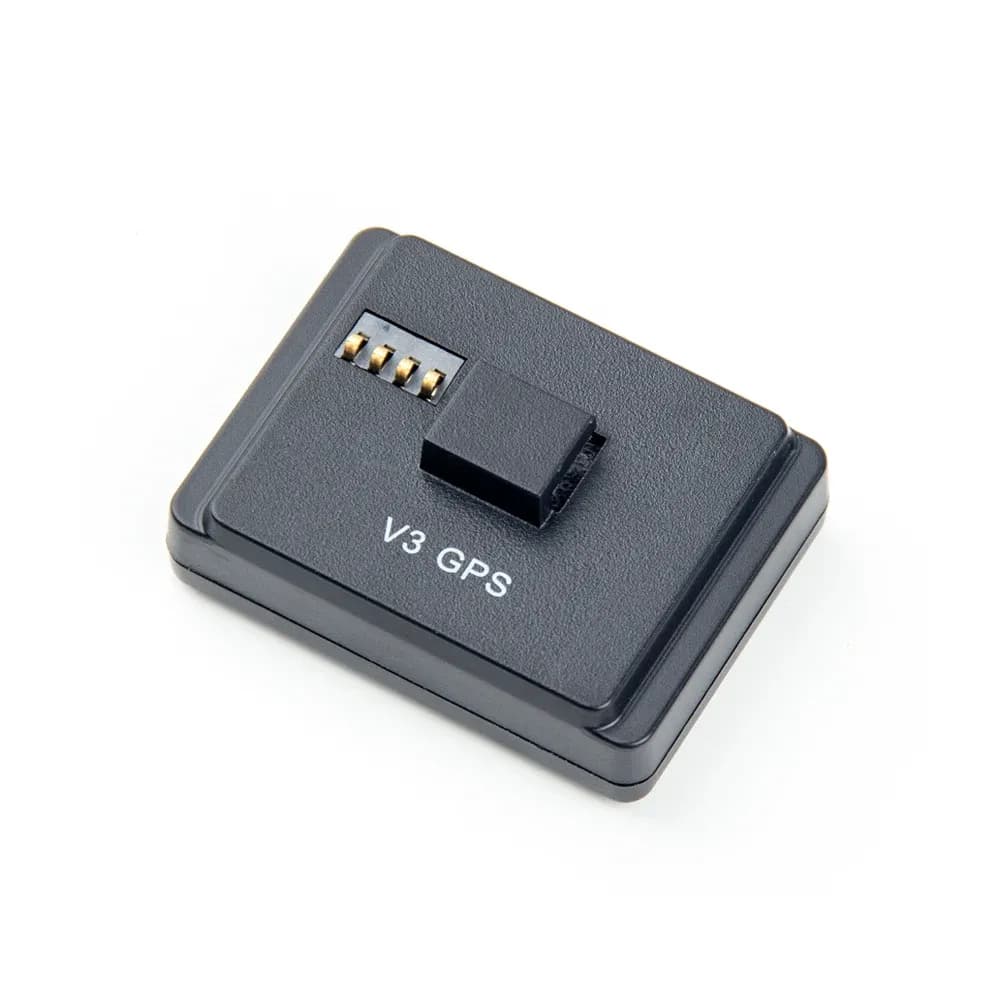
Built-in GPS adds speed and coordinate logging, which gives your footage more context when you need to explain where an event happened. ADAS support can also provide lane or distance-related prompts, though these systems work best as awareness aids rather than full driver-assistance replacements.
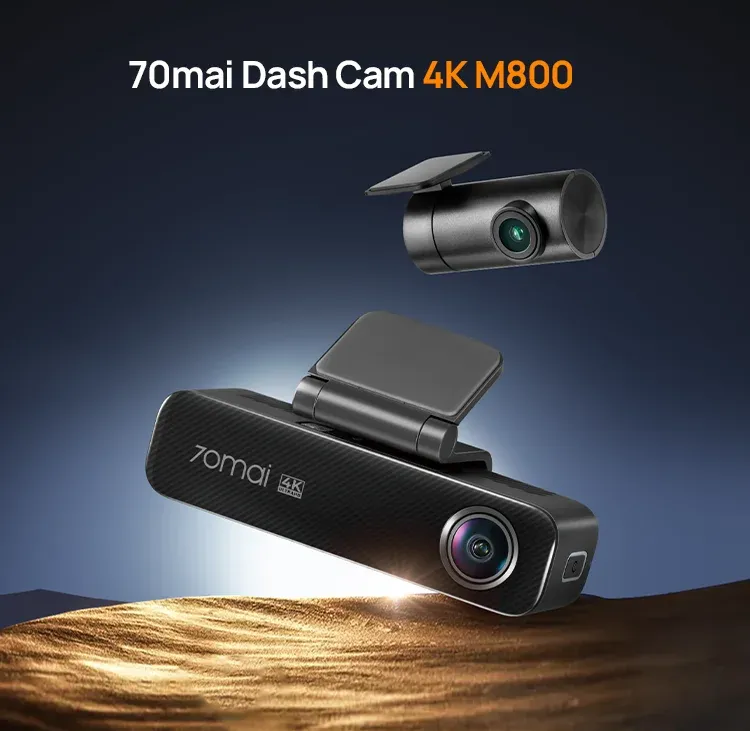
The 24-hour parking guard is the feature that makes the M800 feel more complete for street parking and overnight use. According to customers, packaging and delivery were strong, and the camera’s fit-and-forget design is part of the appeal, especially when paired with the optional rear camera or 4G compatibility for more advanced setups.
Night recording and cabin-friendly usability
NightShot, HDR and 3D DNR are the trio that matter after sunset, because they help preserve detail in headlights, wet roads and shadowed side streets. The result should be cleaner footage with less noise and fewer blown highlights, which is exactly where many dash cams start to struggle.
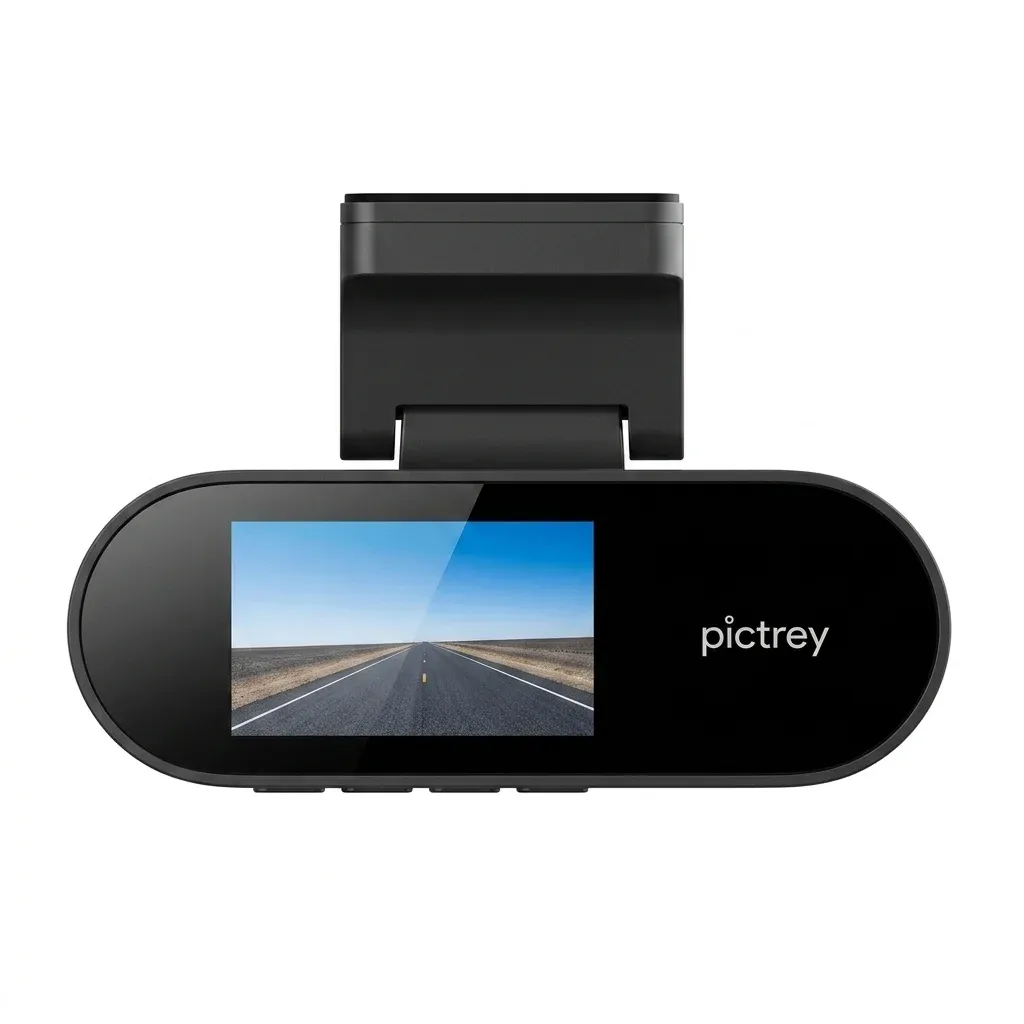
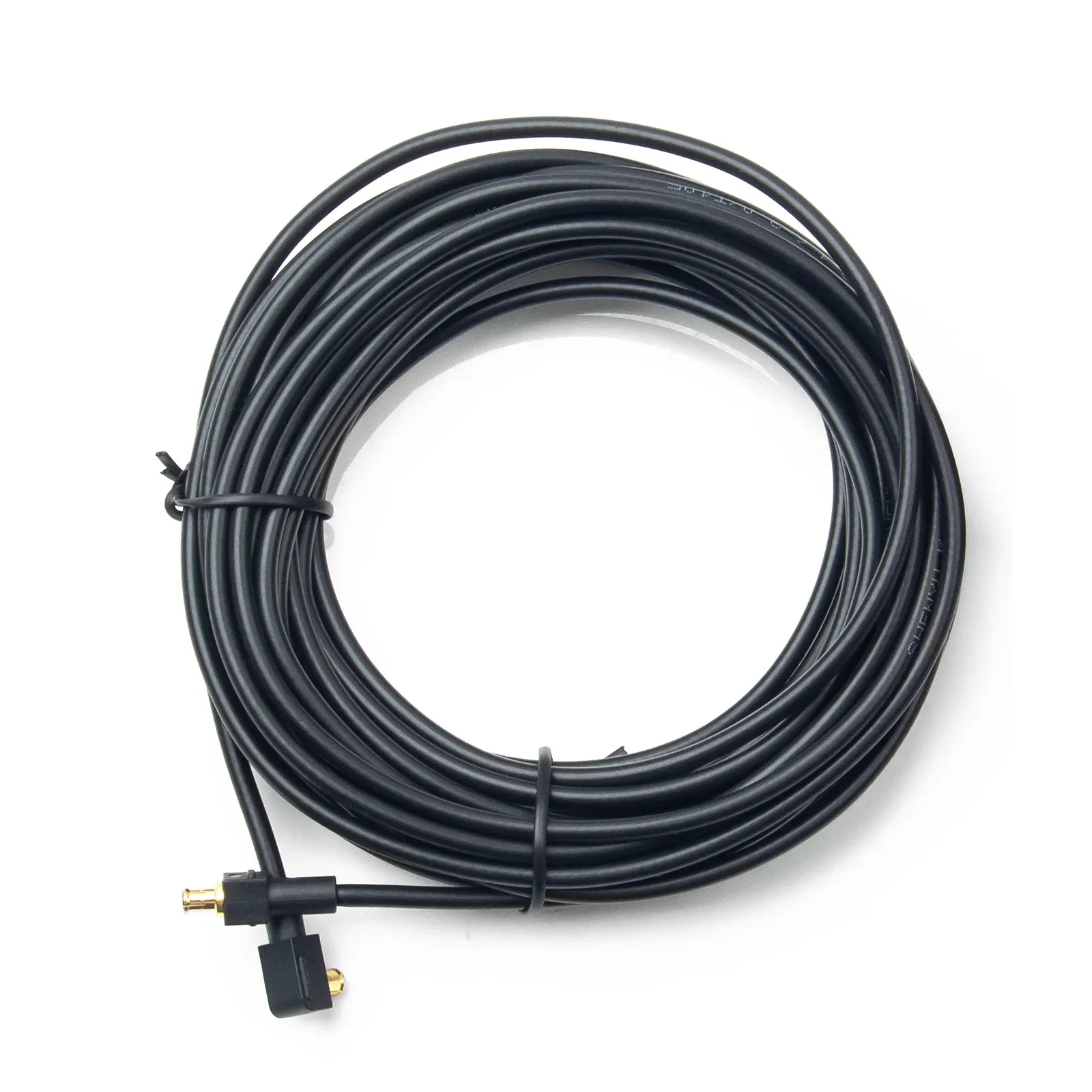
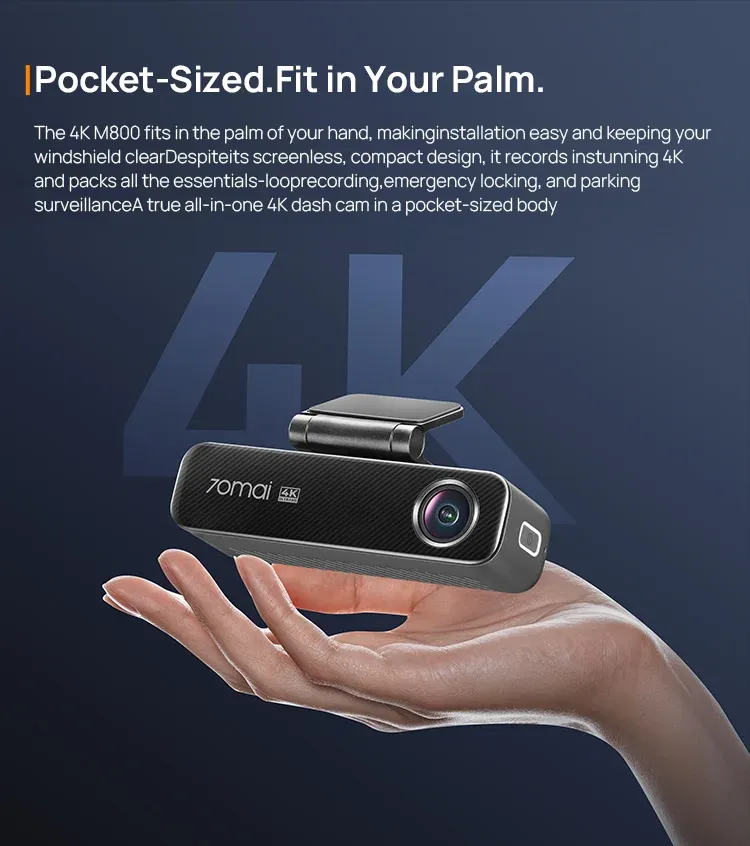
There is no built-in screen, so setup depends on the app and voice control rather than a front-panel interface. That keeps the unit slim at 108 x 37 x 27.5 mm, but it also means the installation needs to be planned carefully if you want a neat cable route and a stable connection.
Who should choose this model over a basic 4K recorder?
This camera makes the most sense for drivers who value integrated storage, GPS logs and parking monitoring more than a cheap entry-level spec sheet. It is a stronger fit than a basic 4K recorder if you want fewer moving parts and a more polished long-term install.
If you already know you will use rear-camera support or 4G features later, the M800 is a sensible base unit because it is built around those upgrades rather than treating them as afterthoughts. That makes it a more future-ready choice than many single-channel dash cams, especially when the footage quality is already starting from a high level.