












A classroom model that also works as a desk display
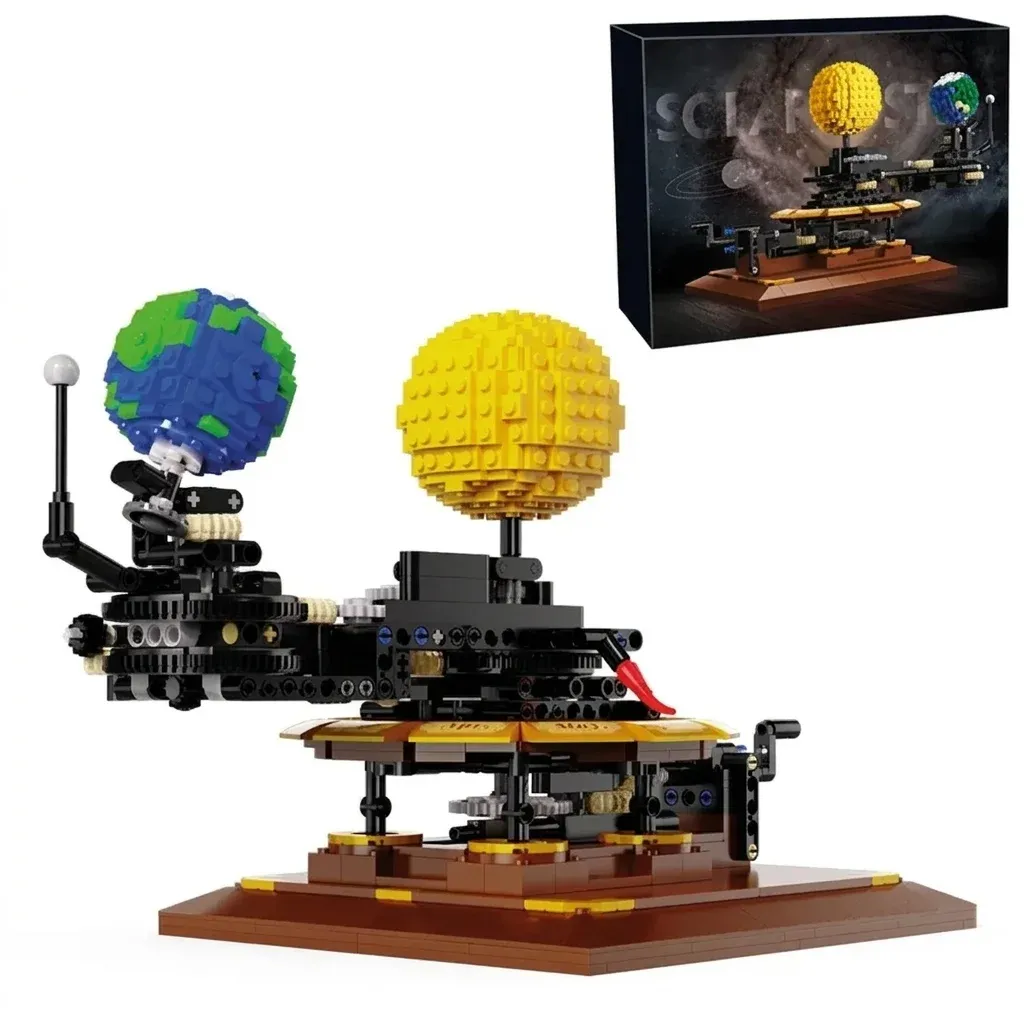
This set solves a familiar problem: astronomy models often look educational but feel flimsy, while display models can be too simple to teach anything. Here, the Earth and Sun clock concept gives the build a clear visual purpose, so the finished model feels like a science object rather than just another decorative brick toy.
With 865 small pieces, the build has enough complexity to keep older children and adult hobbyists engaged without drifting into the territory of an oversized technical project. The compact format also makes it easier to place on a shelf or study desk, which matters when the model is meant to be seen as much as assembled.
How the 865-piece count changes the build experience
The piece count suggests a build that rewards patience and careful sorting, especially because small compatible bricks tend to use tighter connection patterns than larger starter sets. Users describe the mechanics as solid overall, and that matters here because the model depends on alignment and stability to keep the solar-system concept readable once assembled.
At this level, the set sits between a casual children’s toy and a serious MOC-style project. Compared with simpler science kits, it offers more time at the table and a stronger sense of progression, which is exactly what makes the finished model feel earned.
ABS bricks and Lego compatibility: what you actually get

The use of ABS plastic is a good sign for surface finish and long-term shape retention, since the pieces should hold their edges better than softer low-grade plastics. Compatibility with Lego-style small bricks also gives builders more flexibility, because the model can be integrated into an existing collection or modified later.
Real-world feedback is mostly positive on fit and finish, though a few customers noted that some parts can feel slightly loose and that instructions may be faintly printed. That mix is typical of value-focused brick sets, so the practical question is not whether it matches premium Danish tolerances, but whether it delivers a stable and enjoyable build for the money.
Assembly time, instructions, and who will enjoy it most
A reported build time of around four hours is realistic for an experienced builder, and that makes this set a satisfying weekend project rather than a long-term commitment. The age guidance of 14+ and 18+ is sensible, because the model is better suited to teens who already enjoy construction toys or adults who want a science display with a hands-on build.
The instructions appear to be a key part of the experience: when they are clear, the model becomes accessible; when print quality is weak, assembly slows down. That makes this set more appealing to builders who enjoy following brick diagrams closely, which raises an important question about packaging and presentation?

Packaging and gift appeal are the weak points
The biggest drawback is not the model itself but the way it arrives, since multiple users mention simple plastic-bag packaging and occasional crushed boxes. For a gift, that presentation can feel underwhelming even when the contents are complete, so this is worth knowing before you choose it for a special occasion.
There are also isolated reports of missing pieces, which is the main reason to inspect the contents early and keep the order details handy until the build is complete. On the positive side, the set’s CE marking and non-electric design keep it straightforward, safe in concept, and refreshingly free from battery management or motor noise.
Why this CaDA model stands out in AliExpress UK searches
In the AliExpress UK marketplace, this set stands out because it combines a science theme, a respectable 865-piece count, and a display-friendly footprint at a level that still feels accessible. It is not the most refined brick build on the market, but it does offer a thoughtful balance of education, desk appeal, and hands-on construction, which is exactly what many buyers want from a MOC-style astronomy model.