










Two common access frequencies in one handheld tool
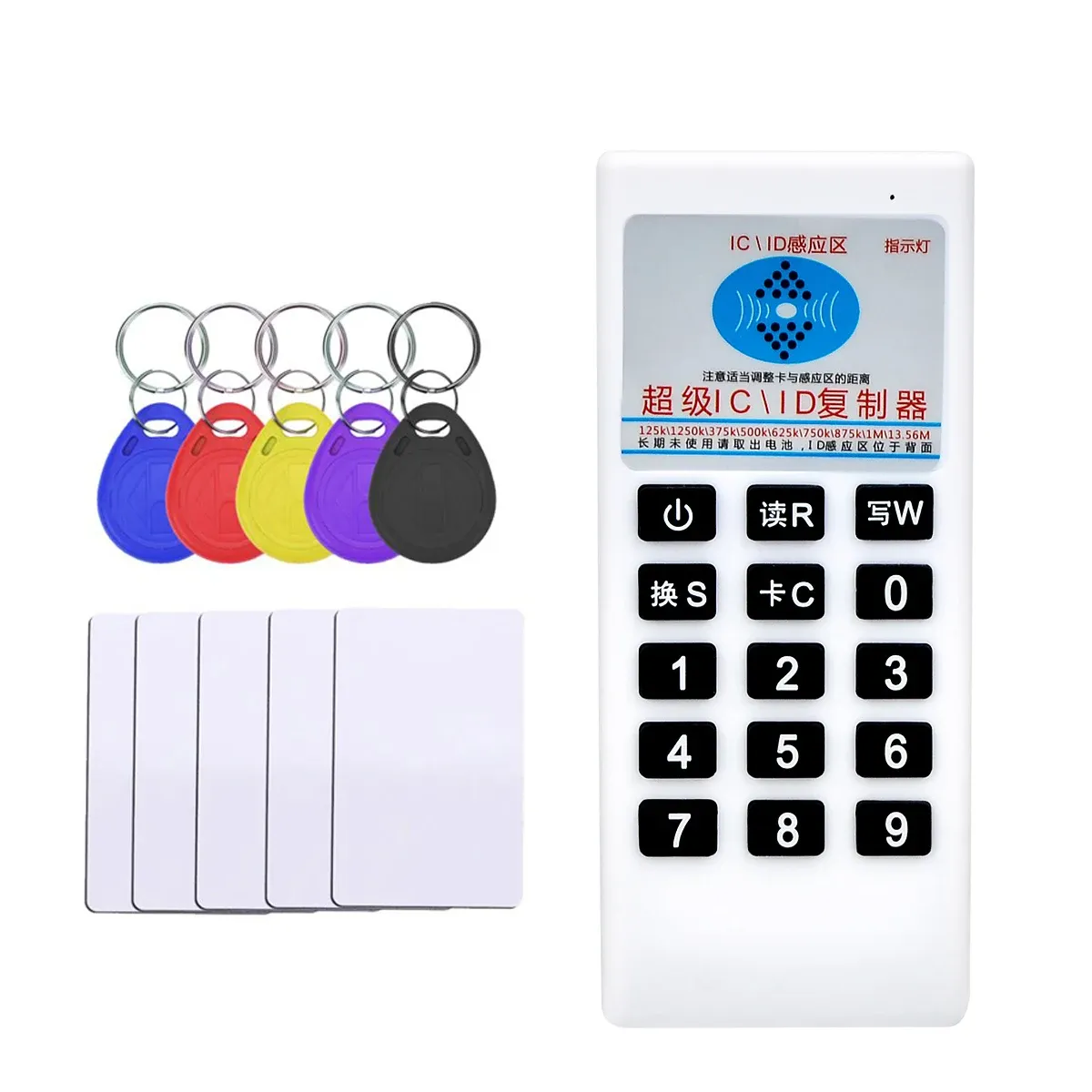
This device solves a familiar access-control problem: keeping track of different card types without carrying separate programmers. It handles 125kHz and 13.56MHz formats in a single ABS shell, which makes it useful for light workshop testing, entry-system checks, and spare-tag preparation.
The appeal is not raw sophistication but convenience. At this level, the value comes from having automatic frequency detection, clear voice prompts, and a built-in LED and buzzer that help you confirm each step without staring at the screen, so what happens when the target tag is closer to the reader?
What the 6cm reading claim means in practice
The listed induction distance is around 6cm, while real-world reading distance is often closer to 2.5cm to 10cm depending on the tag type and power conditions. That is enough for desk use and bench testing, but it is not the kind of range you would expect from a larger dedicated access-control terminal.
Read time is quoted at 0.1 seconds, and that matches the kind of fast response users want when checking whether a card is compatible. The practical benefit is speed during repeated scans, especially when comparing several tags with similar layouts, but the next question is which chips it can actually handle?

Supported chips and where the limits appear
The product description points to support for EM4305, T5577, ZX-F08, and ISO 14443 classic A or B MIFARE cards, including DESFire in the listing text. Real user feedback suggests that basic unencrypted cloning can work well, while encrypted or protected credentials are a different story, which is typical for low-cost cloners in this category.
That limitation matters because many buyers expect a universal copier and get a specialised tool instead. One customer report noted successful manual code entry and working reads at both 125kHz and 13.56MHz, while others said encrypted keys and some UID cards were not copied reliably, so which use case is realistic?
Best fit: spare tags, basic access cards, and quick checks
For simple access-control setups, attendance systems, and basic ID tags, the device is a practical bench companion. It also suits users who need to duplicate writable 125kHz tags such as T5577 or EM4305, where the factory-empty card can be written and re-read after programming.
The PVC card side is rated for over 100,000 write cycles and a 10-year retention period, which is more than enough for routine office or home access use. That makes the real value less about one-time copying and more about maintaining a small stock of reusable credentials, but what should you watch before choosing it?

What the low-cost design gets right
The handheld format is easy to carry, and the ABS body should survive normal desk use without feeling fragile. Two AAA batteries power the unit, which keeps it independent from USB cables and makes it convenient for field checks, though the cells are not included.
CE certification is listed, and no high-concern chemicals are declared, which is reassuring for a budget electronics item sourced through AliExpress UK. The cleanest takeaway is that this is a focused, affordable cloner for straightforward RFID and NFC tasks, not a professional forensic reader or a universal security bypass tool.
- Dual-frequency support for 125kHz and 13.56MHz
- Voice prompts for step-by-step operation
- LED and buzzer status indicators
- Automatic frequency detection
- Portable ABS handheld body
- Works with writable T5577 and EM4305 tags
- Fast scan response for bench testing
- CE-certified listing