








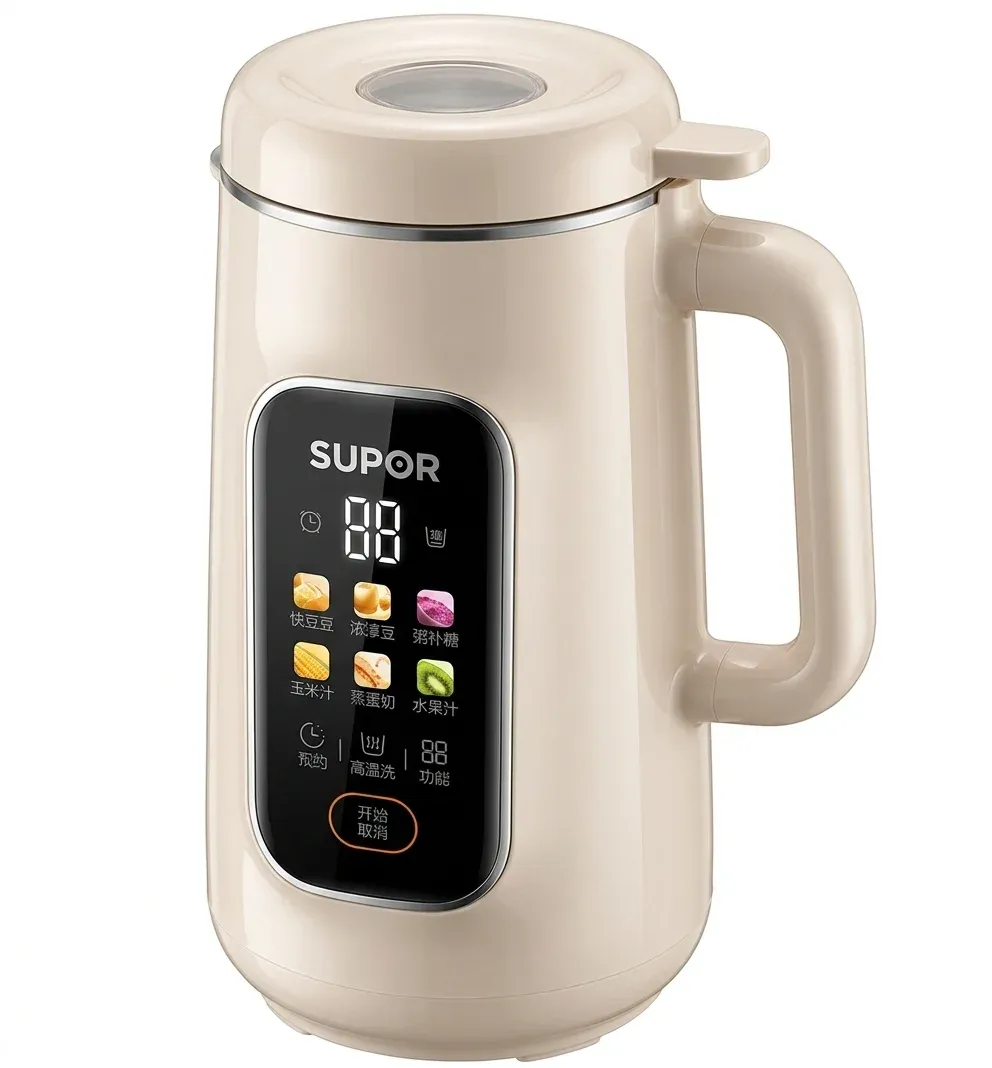

Why this stew pot matters for low-effort cooking
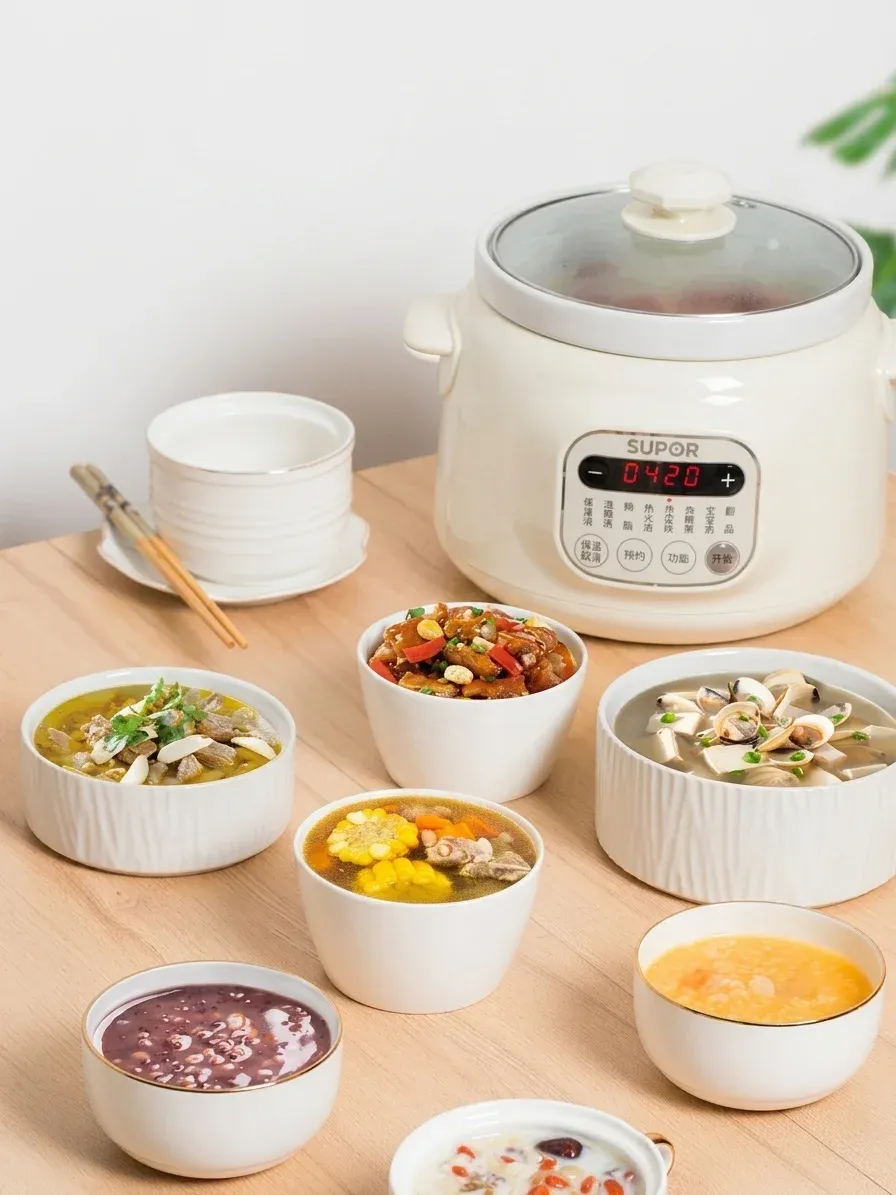
This SUPOR electric stew pot solves a familiar kitchen problem: dishes that need time, but not constant attention. With 230W heating, a reservation function, and a ceramic inner pot, it is designed to keep soups, porridge, and stews moving slowly and evenly rather than boiling them hard.
That gentler approach is what separates it from a standard saucepan or a faster multi-cooker. The result is more controlled texture, especially for rice porridge and long-simmered broths, so the next question is how that ceramic build affects everyday use.
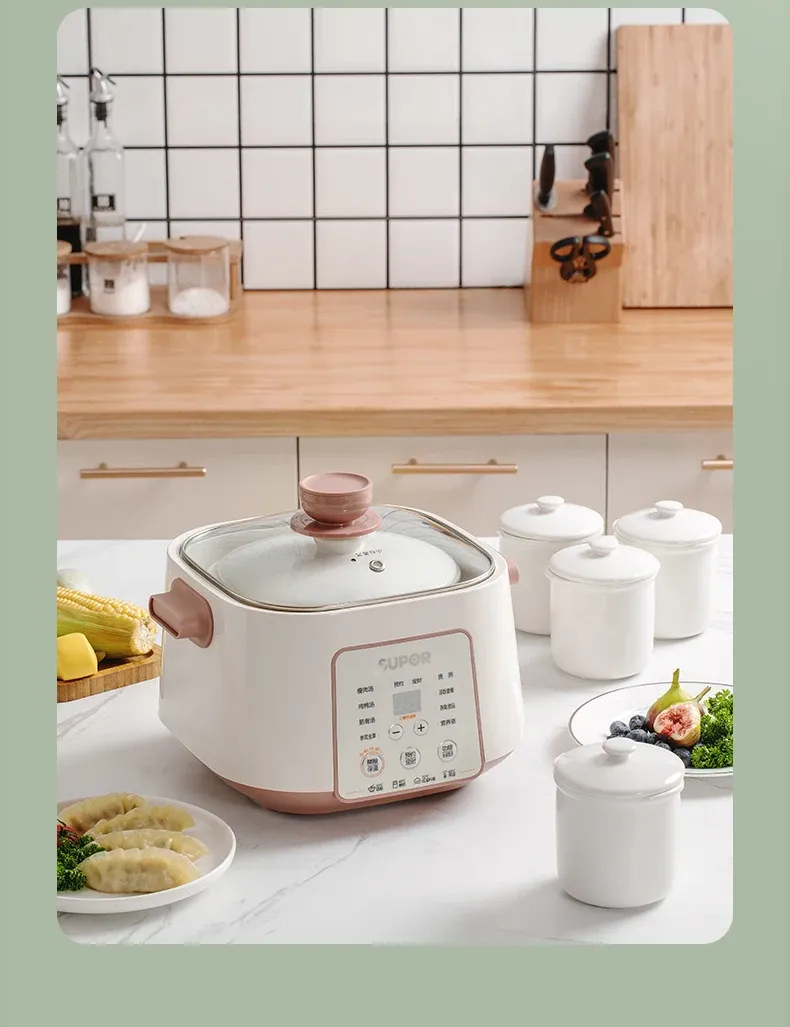
White porcelain and chassis heating in practice
The white porcelain pot is the main reason this model feels more like a slow kitchen tool than a basic electric cooker. Ceramic holds heat steadily and tends to be kinder to delicate ingredients, which can help milk-based recipes, herbal decoctions, and porridge stay smooth instead of scorching at the base.
Chassis heating works from underneath, so the cooking pattern is predictable and easy to understand on the LCD control panel. For users who want a simple set-and-wait routine rather than app-driven cooking, that is a practical advantage, and the 12-month warranty adds a little reassurance.
3L capacity: enough for family portions without crowding the counter

The 3L to under-4L capacity sits in a useful middle ground for small households. It is large enough for several bowls of soup or a full batch of breakfast porridge, yet compact enough to leave room on the counter compared with bulkier 5L stew cookers.
That size also makes it more flexible than a single-purpose porridge pot, because the same vessel can handle yoghurt, rice, soup, stew, and stew porridge. If you cook in batches for two to four people, this is the range where the pot starts to earn its keep.
Reservation mode and computer control: the real convenience feature
The reservation function is the feature that changes the rhythm of the day. You can load ingredients in advance and let the pot start later, which is useful for waking up to porridge or arriving home to a ready soup without watching the clock.
The computer-type control panel and liquid crystal display keep the operation straightforward rather than technical. Users who prefer visible settings over hidden preset logic will appreciate that the interface does not try to behave like a phone, and that simplicity matters more than it sounds.
What users are likely to notice after the first few cooks
According to users of similar SUPOR ceramic stew pots, the biggest payoff is texture consistency rather than speed. Slow heat and water-based stewing usually produce softer grains, fuller broth flavour, and less risk of the sharp edges you sometimes get from aggressive electric cookers.

The colour options, including light yellow, light brown, and light pink, also give it a softer visual presence than stainless-steel kitchen appliances. In an AliExpress UK kitchen roundup, that makes it feel more like a countertop appliance you are happy to leave out, which is useful if you cook daily.
Best-fit uses
- Morning porridge that can start before you get out of bed
- Soup batches for lunch prep across several days
- Gentle braising for ingredients that benefit from slow heat
- Yoghurt and rice recipes where stable temperature matters
What to keep in mind before choosing it
- It is a slow cooker, not a fast pressure model, so speed is not the point
- 220V support makes it best suited to compatible mains environments
- The 230W output is efficient, but it will not match the pace of higher-power cookers