











One bench unit for soldering and rework
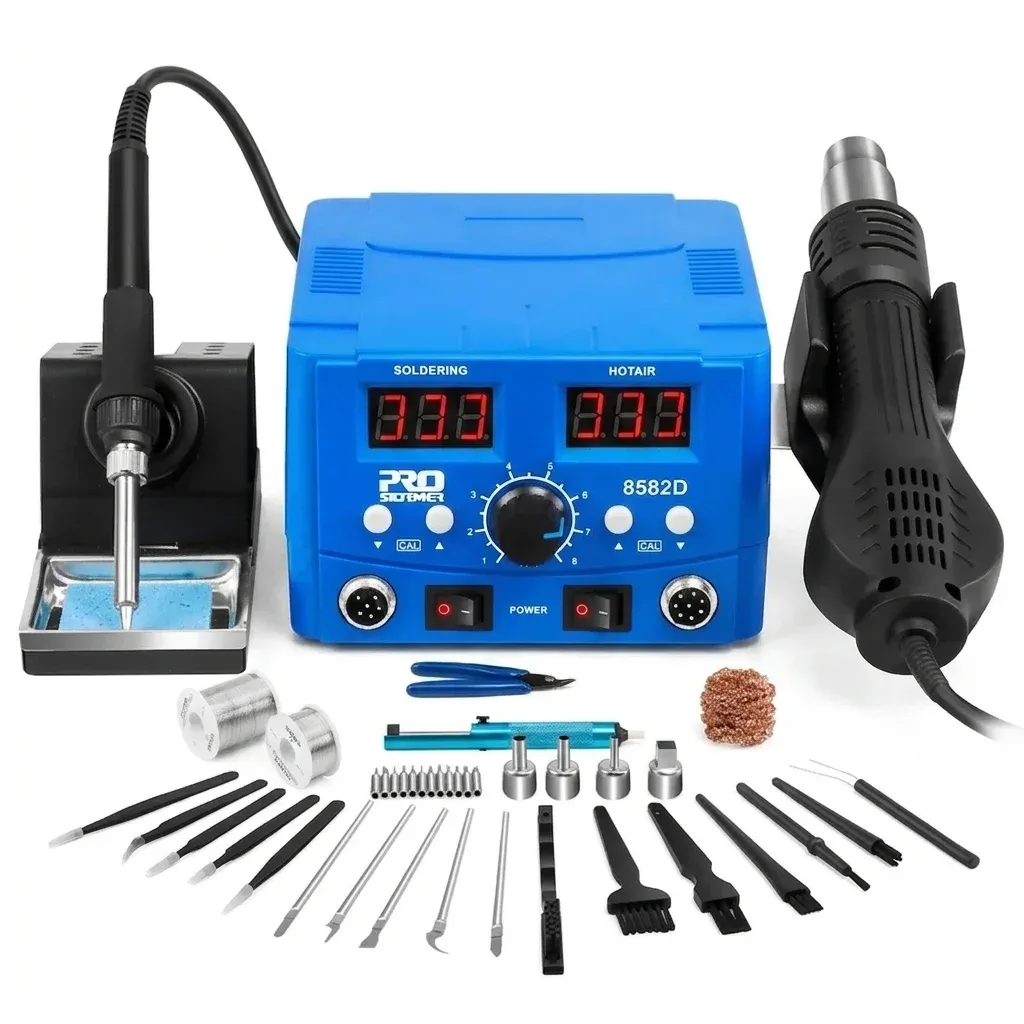
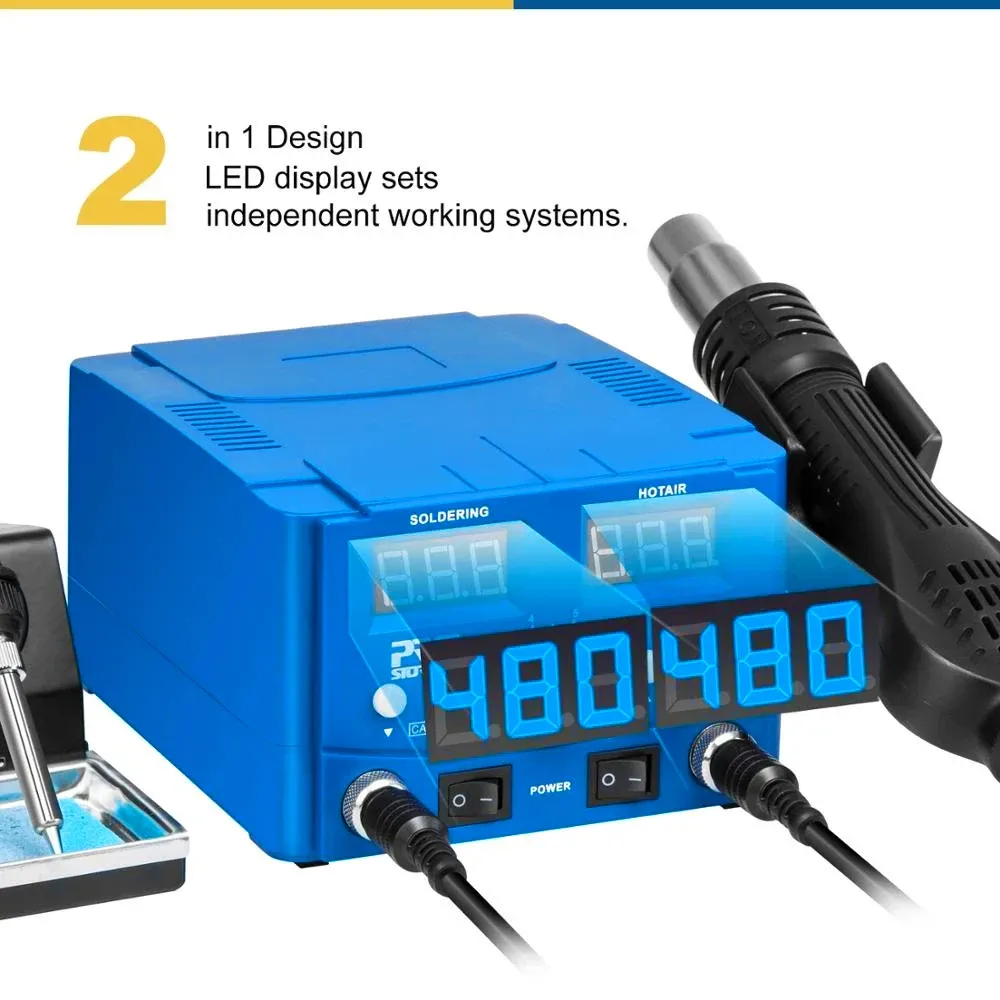
This station solves a common workshop problem: you need precise soldering for through-hole joints and controlled hot air for SMD removal, but you do not want two separate machines taking up space. The Prostormer 8582D combines both tools in one desktop unit, so a repair bench stays cleaner and faster to work from.
For hobbyists and small repair setups, that matters as much as wattage. The layout is aimed at quick switching between tasks, which is especially useful when a board needs both component replacement and local heating in the same session.
750W hot air output for board-level rework
The hot air gun is rated at 750W and covers 100-480℃, which gives enough headroom for lifting SMD parts, softening adhesive, and shrinking tubing without immediately maxing out the control range. In practice, that means you can work on compact boards with more flexibility than a basic handheld heat gun.
Users looking at AliExpress UK will notice that this is closer to a rework tool than a general-purpose blower. The narrower temperature control is what makes it relevant for electronics, because unstable heat is what usually damages pads and nearby components.
80W soldering iron for cleaner joints
The soldering iron is rated at 80W and reaches 200-480℃, which is a useful range for leaded and lead-free work on connectors, headers, and wire repairs. That extra headroom helps the tip recover heat faster when touching larger joints, so the iron feels less sluggish than low-power entry models.
For bench work, the benefit is consistency rather than raw power. If you often move between fine PCB work and slightly heavier repair jobs, the iron side gives you enough thermal reserve to keep pace without constantly waiting for recovery.
LED display and dual-control workflow
The LED display is a practical detail because temperature feedback matters more than people expect in soldering kits. Clear readouts help you avoid guessing, and that is useful when switching between delicate SMD parts and more heat-tolerant joints.
The station also uses separate controls for the two functions, so the iron and hot air gun can be managed independently. That setup is more efficient than single-knob budget units, and it hints at a workstation built for repeat tasks rather than occasional emergency repairs.
What the voltage options mean for UK users
The product comes in AC220-230V with an EU/UK/AU plug, which is the version that fits a typical British bench without extra conversion gear. That makes setup simpler for home workshops and small repair counters that want a plug-and-go station.
The AC100-120V version is listed separately for US use, so buyers should check the plug and voltage before ordering. This is the kind of detail that prevents frustration, especially with heating tools where the wrong input spec can ruin the first session.

Where it fits in a real repair bench
This station makes the most sense for phone repair, small appliance boards, console work, and general electronics maintenance. It is not trying to replace a premium professional rework system, but it does cover the core jobs that most DIY and semi-pro users actually face.
Compared with buying a standalone soldering iron and a separate hot air gun, the attraction is obvious: fewer cables, one control base, and a more compact footprint. That combination is why 2-in-1 stations keep appearing in repair kits, and the next question is whether the build quality matches the idea.
Build expectations and practical limitations
The station is CE certified and made in Mainland China, with customization listed on the product page, which suggests a straightforward workshop-focused design rather than a premium branded lab unit. According to users of similar rework stations, the main appeal is functional value, not luxury fit and finish.
The trade-off is that a combined unit usually asks for a little more care in setup and cooling discipline than a standalone iron. If you plan to use it for frequent board repair, keeping the handpieces seated correctly and respecting the temperature range will matter more than the headline wattage.