











Fast detail work without the bulk of a full-size grinder
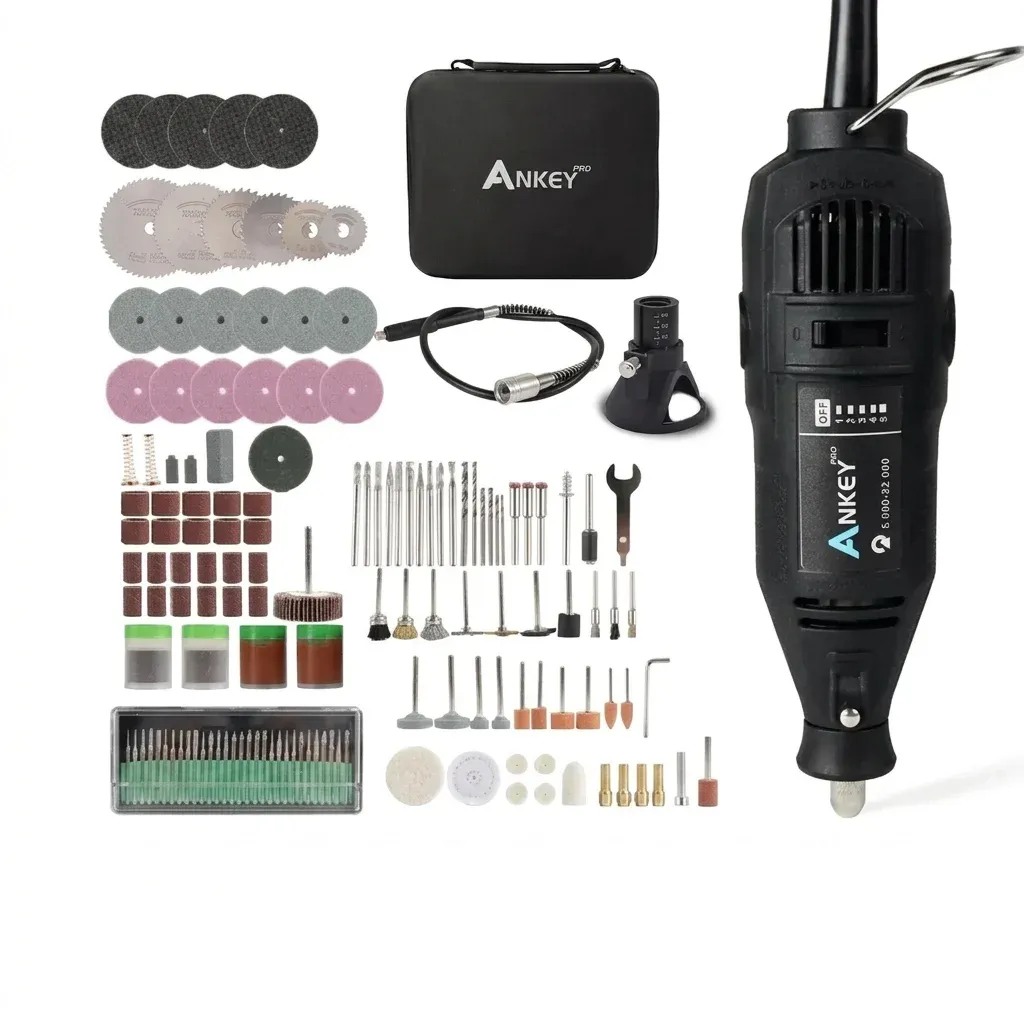
This tool is aimed at users who need controlled precision rather than brute force. Its 180W motor and 35,000rpm top speed make it suitable for trimming, engraving, polishing, and sharpening jobs that feel awkward with a larger drill or angle grinder.
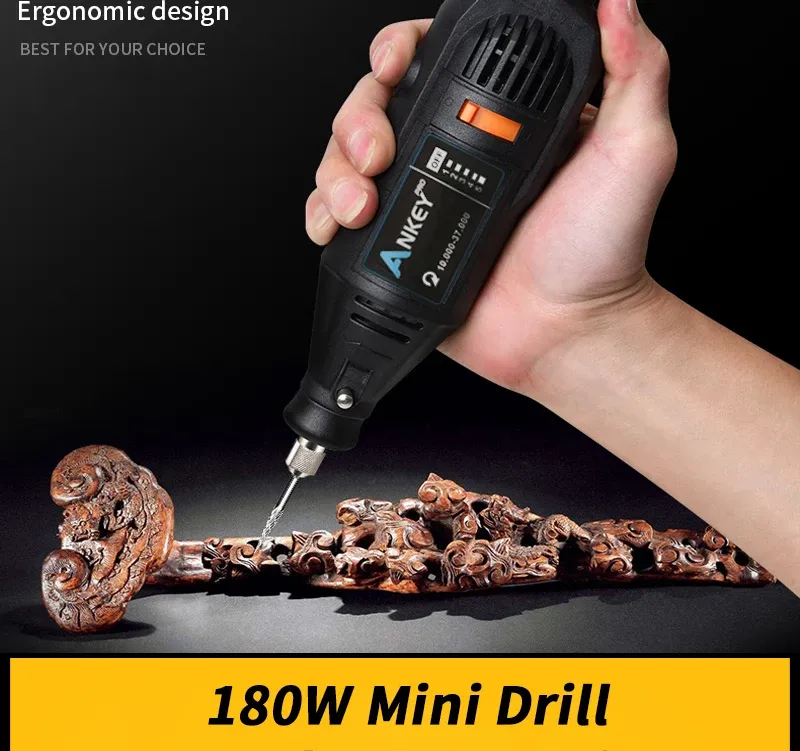
At 0.5kg, it is light enough to guide with one hand, which matters when you are tracing a line on wood or cleaning up a small metal edge. The mains-powered setup also removes battery fade, so the output stays consistent during longer sessions.
What 35,000rpm means for carving and polishing
High no-load speed is the main reason this mini drill feels more like a rotary tool than a conventional drill. In practice, that means smoother engraving marks, faster material removal on soft surfaces, and a cleaner finish when you move into polishing or deburring.
The variable output rate is the useful part here, since delicate work needs a calmer touch than cutting or grinding. Users who work on resin, wood lettering, model parts, or small household repairs will notice the difference when the bit stops biting too aggressively.
3.2mm bit support keeps the setup simple
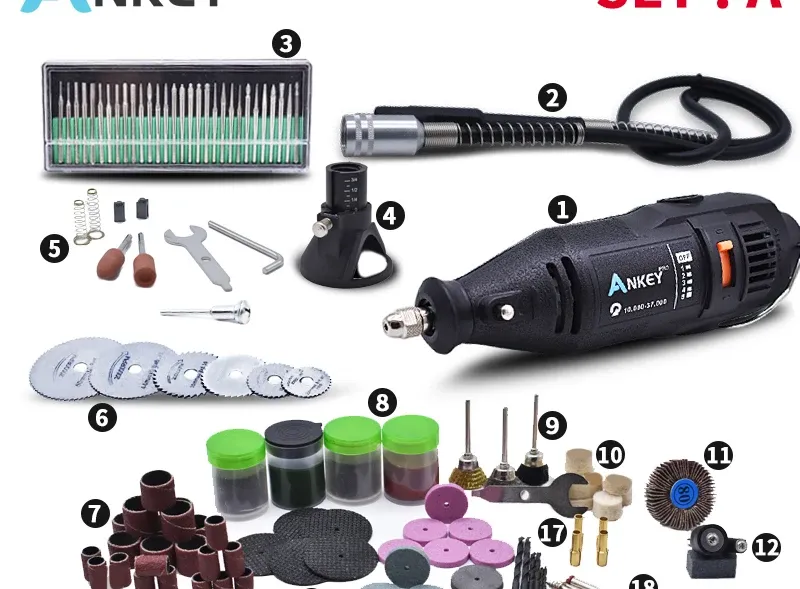
The 3.2mm maximum drilling diameter points to a standard mini-tool format, which is easy to pair with common rotary accessories. That makes the WSL-DM-3 more flexible than niche engraving pens that only accept a narrow accessory range.
This is especially helpful for DIY users who already own polishing heads, burrs, sanding drums, or small cutting wheels. A wider accessory ecosystem usually matters more than raw wattage once the work becomes detailed, so the tool’s real value comes from compatibility.
Where the brushed motor helps, and where it does not
The brushed motor keeps the design straightforward and usually helps hold the entry-level cost down. It is a practical choice for home workshops where the tool will be used in shorter bursts for carving, cleaning, or sharpening rather than all-day industrial duty.
It is less convincing for heavy repetitive use, because brushed motors typically need more maintenance than brushless alternatives. That trade-off is normal at this level, and it explains why the tool feels best suited to hobby benches instead of a production line.
Real-world feedback and packaging quality
Customer feedback is limited, but the available ratings are strong, and users repeatedly mention solid power and careful packaging. One review also notes rigid box protection with bubble wrap, which is reassuring for a tool that needs its collet and spindle to arrive aligned.
That matters because a rotary tool can feel disappointing if it vibrates badly out of the box. The early feedback suggests the ANKEYPRO unit is more polished than its low-cost appearance suggests, which makes the next question about who should actually use it.
Best fit for home DIY, not heavy construction
This is a good match for model makers, crafters, and DIY users who want one compact tool for several finishing tasks. It can handle carving, grinding, polishing, cutting, and cleaning in a way that saves bench space and reduces the need for multiple dedicated tools.
It is not the right pick for deep drilling or sustained structural work, because the 3.2mm accessory limit and mini-drill format keep it in the detail-work category. If your projects are small, precise, and frequent, the tool’s balance of speed and control is where it earns its place.