










Built for faster reinforcement tying on active sites
The Heimerdinger rebar tier is aimed at one job: cutting the time spent tying reinforcement by hand. In commercial manufacture, that matters because repetitive wrist work slows crews down and creates inconsistent knots, especially on dense cages and overhead sections.
Heimerdinger has built a solid reputation in the AliExpress UK tools niche by focusing on practical, battery-platform-compatible machines rather than flashy extras. That approach usually appeals to buyers who want a usable jobsite tool with sensible engineering, and this model follows that pattern.
What the 8–34 mm tying range means on site
The 8–34 mm binding range covers common reinforcement sizes used in slabs, beams, tunnels, and bridge work. That makes the tool relevant for general construction rather than narrow specialty tasks, so a crew can move from lighter mesh to thicker bar bundles without changing equipment.
At 150W and DC 18–21V, the machine is designed for speed rather than brute force, which is exactly what most tying jobs need. Users should expect a machine that prioritises repeatable cycles and reduced hand strain, not a heavy industrial unit that feels overbuilt for everyday reinforcement work.
Why the adjustable gear setting matters more than it sounds

The independent gear adjustment is the feature that gives this model real jobsite flexibility. A tighter setting can help when the bars are closely packed, while a stronger bundle setting is useful when the cage is larger or the wire needs more hold.
One customer review noted that the machine automatically feeds, cuts, and ties in a single motion, which is the main reason to use this type of tool in the first place. The same review also said the ties could be tighter, so buyers should see the adjustment knob as a tuning aid rather than a guarantee of maximum clamp force.
Makita 18V compatibility without the battery included
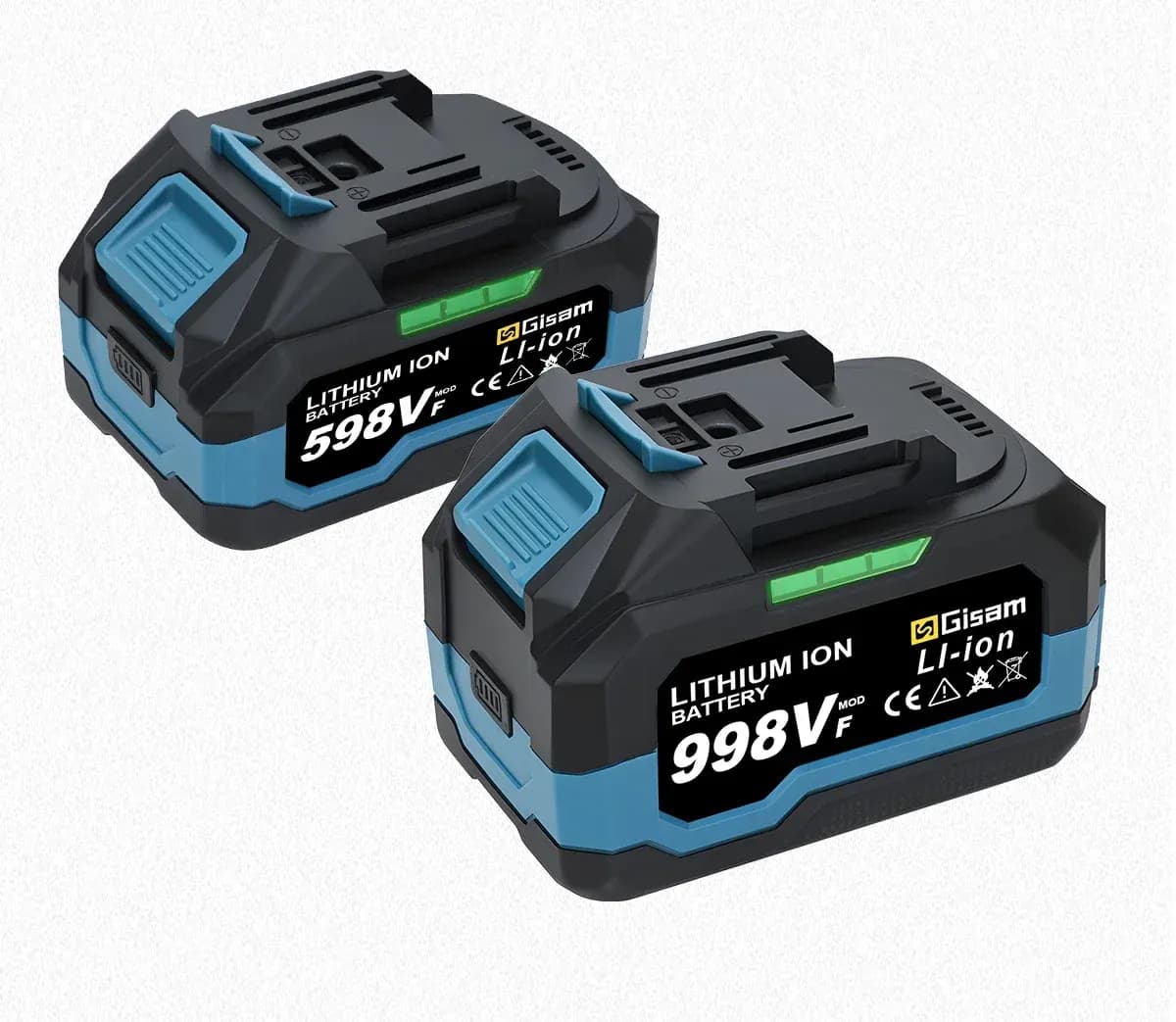
This is the body only version, so the value depends heavily on whether your site already runs Makita 18V B-series batteries. That is a practical advantage for contractors who want to expand an existing battery ecosystem instead of adding another charger and another battery standard to the van.
The compatibility list is specific: it works with common Makita 18V lithium packs such as BL1850B, BL1840B, and BL1830B, but not G-series or older Ni-Cd batteries. That detail matters because the wrong battery type can turn a useful tool into an unusable one, so checking your pack before ordering is essential.
3 kg weight and the feel of a tool made for repetition
At 3 kg, this is light enough to handle for repeated tying sessions without feeling like a bench-only machine. The balance should suit vertical work and quick repositioning, which is important when crews are moving along long reinforcement runs or working in awkward corners.

The safety lock is a welcome touch because accidental trigger pulls are a real concern on busy sites. It does not change the machine’s output, but it does make the tool feel more controlled in the hand, especially when moving between ties and re-gripping the frame.
What the included wire data tells you about running costs
The 0.8 mm wire diameter and the sample review’s estimate of around 200 ties from roughly 100 m of wire give a useful real-world benchmark. That suggests the machine is built around efficiency, but also that wire consumption is predictable enough for planning consumables on larger jobs.
For users comparing this with manual tying pliers, the biggest gain is consistency under speed. Manual tying may still produce tighter custom knots in some cases, yet this machine is clearly aimed at reducing fatigue and keeping pace on commercial sites, which is where it earns its place.
- Automatic wire feed, cut, and tie cycle
- Suitable for 8–34 mm reinforcement bundles
- Compatible with Makita 18V B-series batteries
- Independent gear adjustment for different tying conditions
- Safety lock for accidental trigger prevention
- 3 kg body for easier handling on site