






Compact power for detailed DIY work
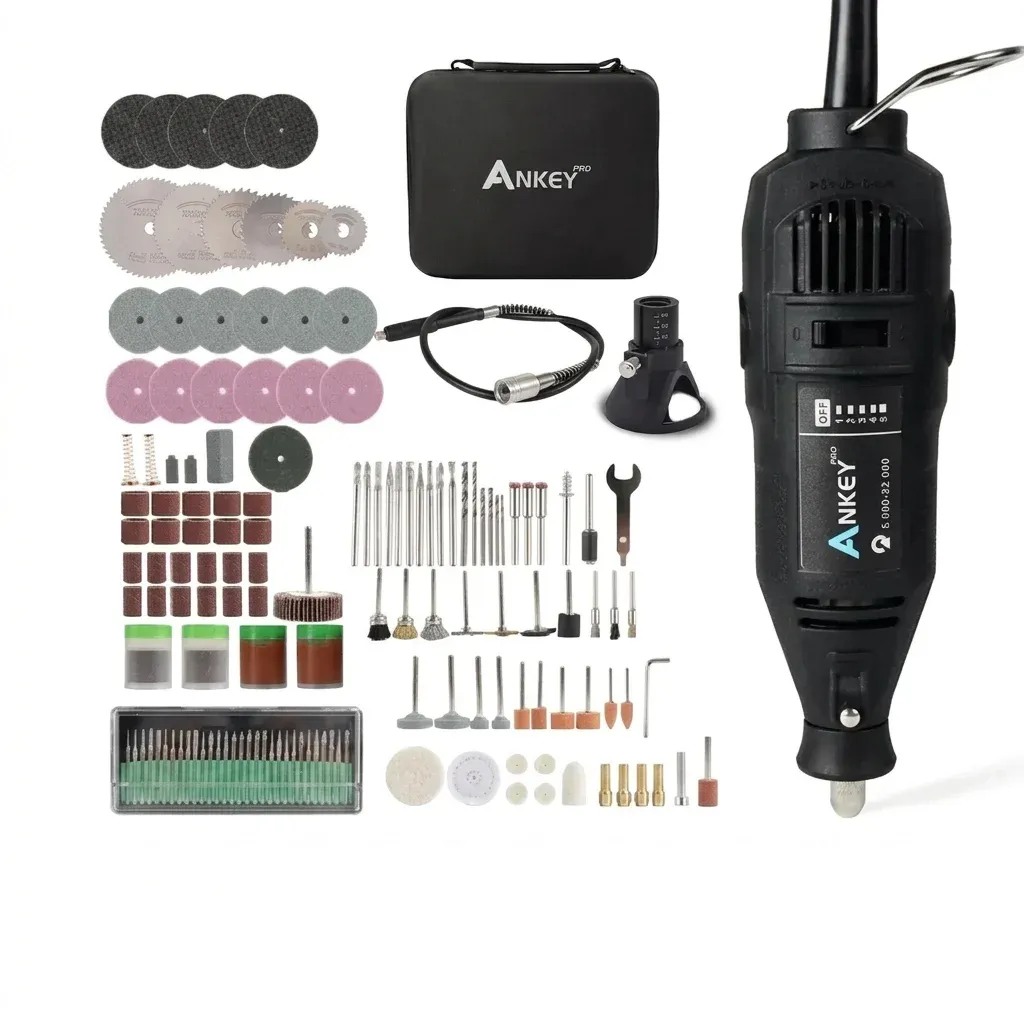
This mini rotary tool solves a familiar problem: small jobs need control, not bulk. With a 230W rated input, a 30,000rpm no-load speed, and a reported working range up to 31,000/min, it is built for engraving, polishing, and trimming tasks where a larger drill feels clumsy.
The corded AC setup keeps the tool ready for longer sessions, which matters more than battery freedom in precision work. At 0.7kg, it should feel light enough for steady hand control, and that weight usually helps when you are tracing lines on wood, soft metal, resin, or plastic.
What the speed range changes in practice
Variable speed is the feature that gives this tool its real usefulness. Lower speeds help when you want to avoid scorching a surface, while the higher end is better for cutting discs, sharpening, and fast material removal on small parts.
Users mention that it works well for simple grinding, which fits the spec sheet better than heavy-duty workshop expectations. If you need a tool for delicate detailing rather than aggressive drilling, the speed spread is the detail that makes the difference, but how does the accessory set shape the experience?

Accessories and 3.2mm bit compatibility
The 3.2mm maximum drilling diameter points to a standard mini-tool ecosystem, so the value depends on the collets and bits included in the package. That matters because rotary tools live or die by accessory compatibility, especially when you want to move from engraving to polishing without changing machines.
For AliExpress UK shoppers, the appeal is that this sits in the common hobby-tool format rather than a proprietary system. That makes it easier to replace worn bits, test different burrs, and build a small kit around one body instead of collecting several single-purpose tools.
Where it fits better than a full-size drill
This is not a replacement for a heavy drill driver, and the brushed motor confirms that it is aimed at straightforward DIY rather than premium efficiency. It makes more sense for model making, craft finishing, edge cleanup, and light restoration, where finesse matters more than torque.

The CE certification and universal 220V to 240V input are practical signals for home use in the UK, while the 50Hz/60Hz support keeps the electrical spec flexible. One customer comment described it as suitable for simple grinding, which is a fair way to frame the tool: capable for light tasks, modest for demanding ones.
Who will get the most from it
Hobby users who want a low-cost rotary tool for engraving, sharpening, or cleaning small parts will understand this product fastest. It also suits occasional DIYers who prefer a corded tool that stays ready on the bench instead of waiting on a charge cycle.
The red-and-black housing gives it a straightforward workshop look, and the customised listing suggests the package may be tuned for a specific seller setup. If you are building a compact accessory-led kit, the next question is whether the trade-off between simplicity and raw power matches your projects.