











Fast surface correction without heavy workshop gear
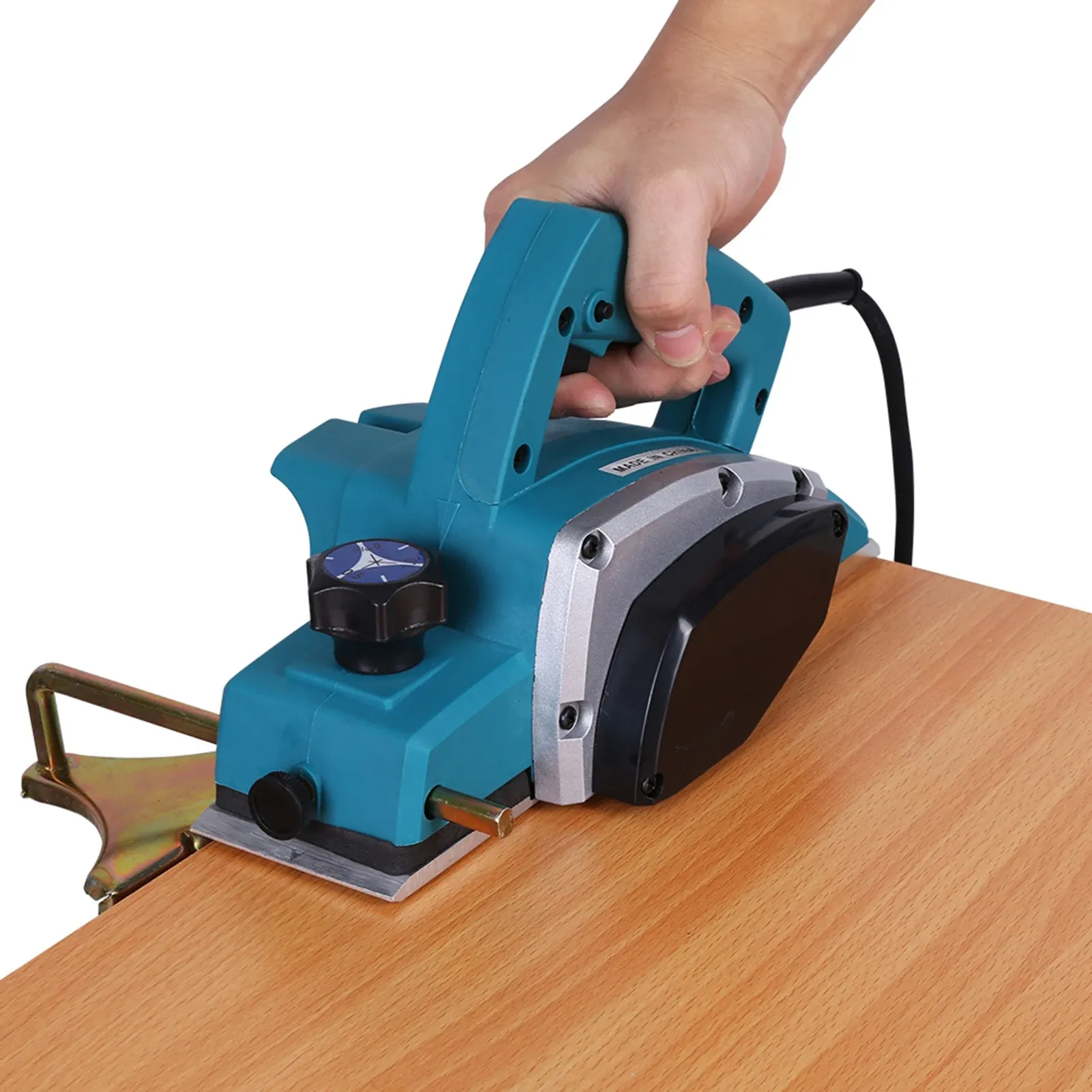
This handheld planer solves a common joinery problem: taking down proud edges, warped boards, and rough timber without reaching for a full benchtop machine. The 800W motor and 13,000-16,000RPM range suggest enough speed for light to medium household woodworking, where control matters more than brute force.
It is aimed at users who want a portable tool that can travel from a garage bench to a furniture repair job. That makes it more practical than a large stationary planer when the workpiece is already installed or awkward to move, so how does it handle the cut itself?
What the 1mm planing depth means in real use
The stated 1mm planing depth is modest, which is a good sign for cleaner passes on furniture panels and edge trimming. It is not built for aggressive stock removal, but that restraint helps reduce tear-out on softer woods and gives you more control on visible surfaces.
For cabinet doors, shelves, and reclaimed timber, that smaller bite is often the safer choice. Users who need to true up a surface gradually will likely appreciate the finer adjustment, especially when the goal is a flatter board rather than a rapid reshaping job.
Aluminium base and copper motor: why they matter
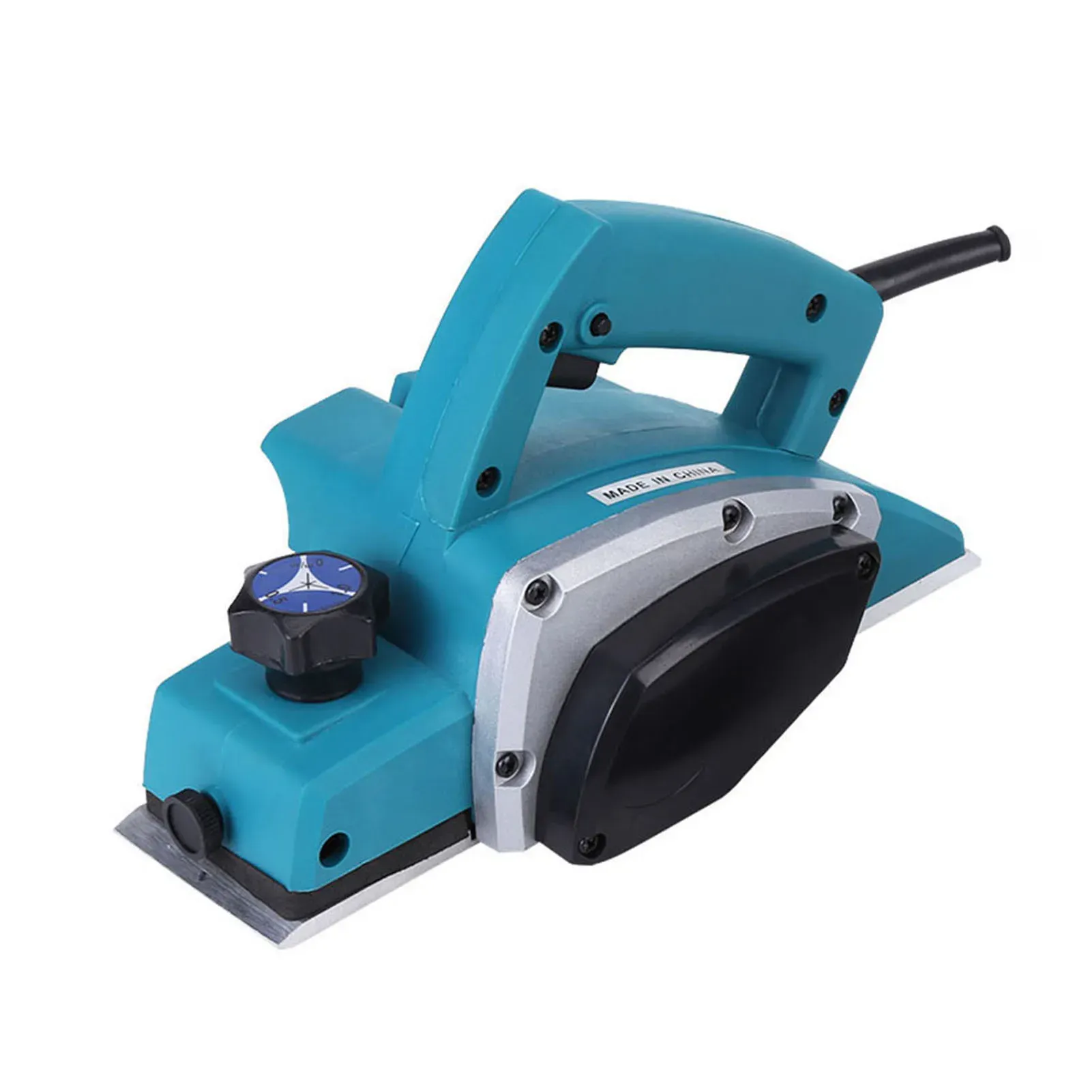
The finely processed aluminium bottom plate is one of the more useful details in the spec sheet because it helps the planer glide smoothly and keep the cut face even. In practice, that can translate into less chatter and a more uniform finish, which is exactly what matters when the wood will stay visible.
The copper-wire motor design points to better heat handling and longer service life than basic windings found in cheaper tools. According to users of similar corded planers, a stable motor and solid base plate are the difference between a tool that skates cleanly and one that leaves marks you need to sand out later.
Safety and control on longer passes
The self-locking switch is a sensible inclusion because it reduces hand fatigue during repeated passes and helps prevent accidental operation. The contoured top handle also improves grip, which matters when the planer is pulling itself across dense grain or a narrow edge.
The trigger placement and handle shape suggest the tool is designed for straightforward one-handed guidance rather than two-handed industrial work. That makes it easier to manage on home furniture projects, though the 3kg weight means you will still feel it during overhead or extended use.
Accessories that make setup easier
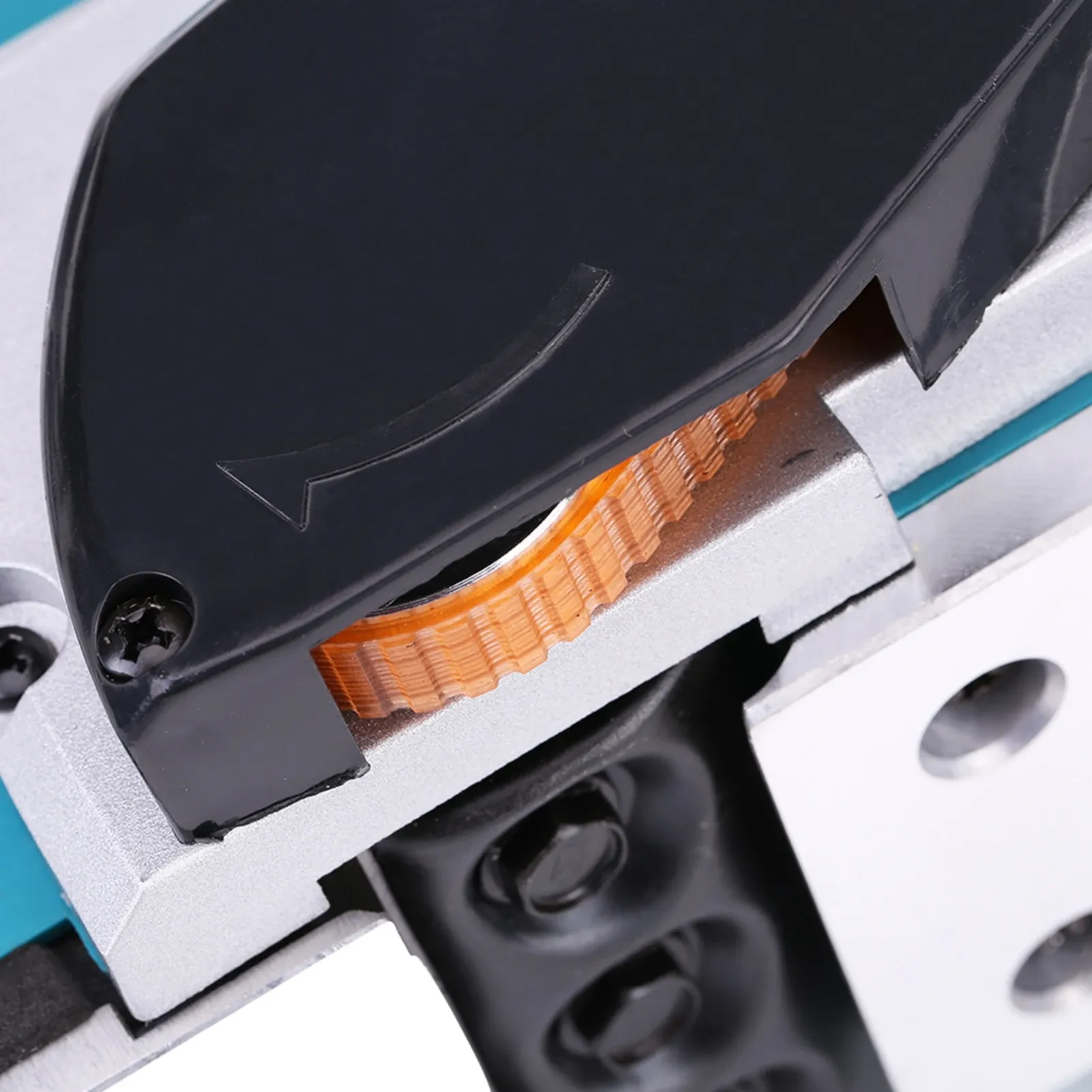
The supplied guide ruler, socket spanner, blade sharpener frame, and butted-knife frame add real value because they help with alignment and maintenance from day one. A planer that arrives with sharpening support is more useful over time, since blade condition has a direct impact on finish quality.
This package is better suited to users who want a ready-to-use kit instead of sourcing separate setup parts. If you are comparing it with a bare-bones cordless planer body, the included accessories make the learning curve a little easier, and the next question is whether it fits your workshop setup.
220V corded power for steady workshop work
The 220V mains supply keeps output consistent, which is helpful when you are working through dense hardwood or making repeated passes on multiple boards. Unlike battery tools, it will not fade mid-job, so it suits longer sessions where uninterrupted performance matters more than mobility.
The trade-off is obvious: this is a workshop or home-garage tool, not a remote-site planer. For users who already work near a power outlet and want a dependable smoothing tool at an accessible level, the specification set is coherent and easy to understand.