








Built for the jobs that need real lifting confidence
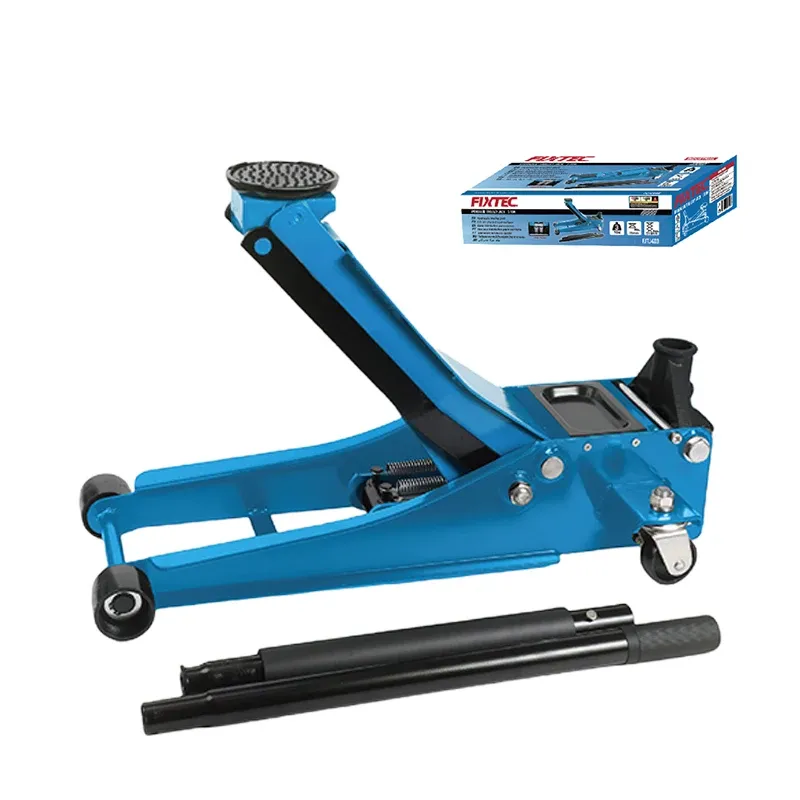
This trolley jack solves a familiar workshop problem: getting a car safely off the ground without wasting time on slow, unstable lifting. FIXTEC has built a reputation in the AliExpress UK tools space for practical, work-ready equipment that focuses on structure, load handling, and usable features rather than flashy extras.
That approach shows here in a steel-bodied hydraulic jack with a 3-ton rating and a dual-pump handle, which should make the first stage of lifting feel noticeably quicker. If you service family cars, vans within the weight limit, or run a small garage bay, the real question is how much control it gives once the wheels leave the floor.
3-ton capacity: what it means in the workshop
A 3-ton rating is not just a headline number; it gives you enough reserve for most passenger vehicles and many heavier road cars when used correctly. That margin matters because a jack that is working near its limit tends to feel less composed, especially on uneven concrete or when the chassis point is awkward to reach.
Compared with lighter 2-ton trolley jacks, this class is better suited to users who want one tool for regular maintenance instead of a second jack for heavier vehicles. It is still a hydraulic floor jack, so it should be paired with axle stands for any job that keeps the car raised for more than a brief inspection.
Dual-pump action and why it speeds up real use
The dual-pump handle is the most practical feature in the spec sheet because it reduces the number of strokes needed to bring the saddle into contact with the lifting point. In day-to-day use, that saves effort and makes the jack feel less tiring when you are repeating wheel changes or brake work.
Users usually notice this benefit most on vehicles with moderate ground clearance, where the first lift stage is the slowest part of the job. The handle-driven hydraulic system should also give a more controlled rise than a cheap scissor jack, which is useful when you want the car to come up smoothly rather than jump into position.
Steel construction and workshop durability
Steel is the right material choice for a trolley jack that is expected to live in a garage, boot, or service bay. It gives the frame the rigidity needed to keep the jack aligned under load, and it tends to cope better with repeated movement across hard floors than lighter-duty alternatives.
The trade-off is weight, so this is not the kind of jack you casually carry long distances. That said, a portable steel frame is still a sensible compromise for users who want workshop-grade behaviour without moving to a bulkier lift system, and that balance is where the product makes most sense.
3-inch minimum height and low-clearance access
A minimum height of 3 inches helps the jack fit under many cars that sit close to the ground, which is often where budget lifting tools become frustrating. If you work on lowered hatchbacks or sports-style road cars, that lower entry point can be the difference between a smooth setup and a struggle with ramps first.
It is still worth checking your vehicle’s jacking points before use, because low-profile access does not guarantee fit on every body style. The useful part is that FIXTEC has aimed this model at the awkward end of the market, where clearance is often the first obstacle, so what happens next is how the handle and saddle behave under load.
Who this jack suits best
This model fits home mechanics, small workshops, and repair users who want a dependable floor jack for routine maintenance rather than a compact emergency tool. According to customers, the appeal usually comes down to the combination of lifting confidence and the cleaner, more professional feel of a trolley jack over portable alternatives.
If you only need something for an occasional roadside tire change, this is more jack than you need. If you want a stable, workshop-style solution for brake work, wheel rotations, and suspension checks, the format makes far more sense and should feel natural in a proper garage workflow.
What to check before you use it
- Confirm the vehicle weight stays within the 3-ton limit.
- Use axle stands for any raised work beyond a quick lift.
- Check clearance against the 3-inch minimum height.
- Inspect the lifting point on the vehicle before placing the saddle.
- Keep the floor level and solid for the most stable operation.
The package arrives in a colour box, which suggests it is aimed at retail presentation as well as workshop use. That makes the final impression feel more complete, but the important part is whether the hydraulic action stays consistent after repeated jobs, which is exactly where a jack earns its place.