











Why this cordless jig saw matters on site
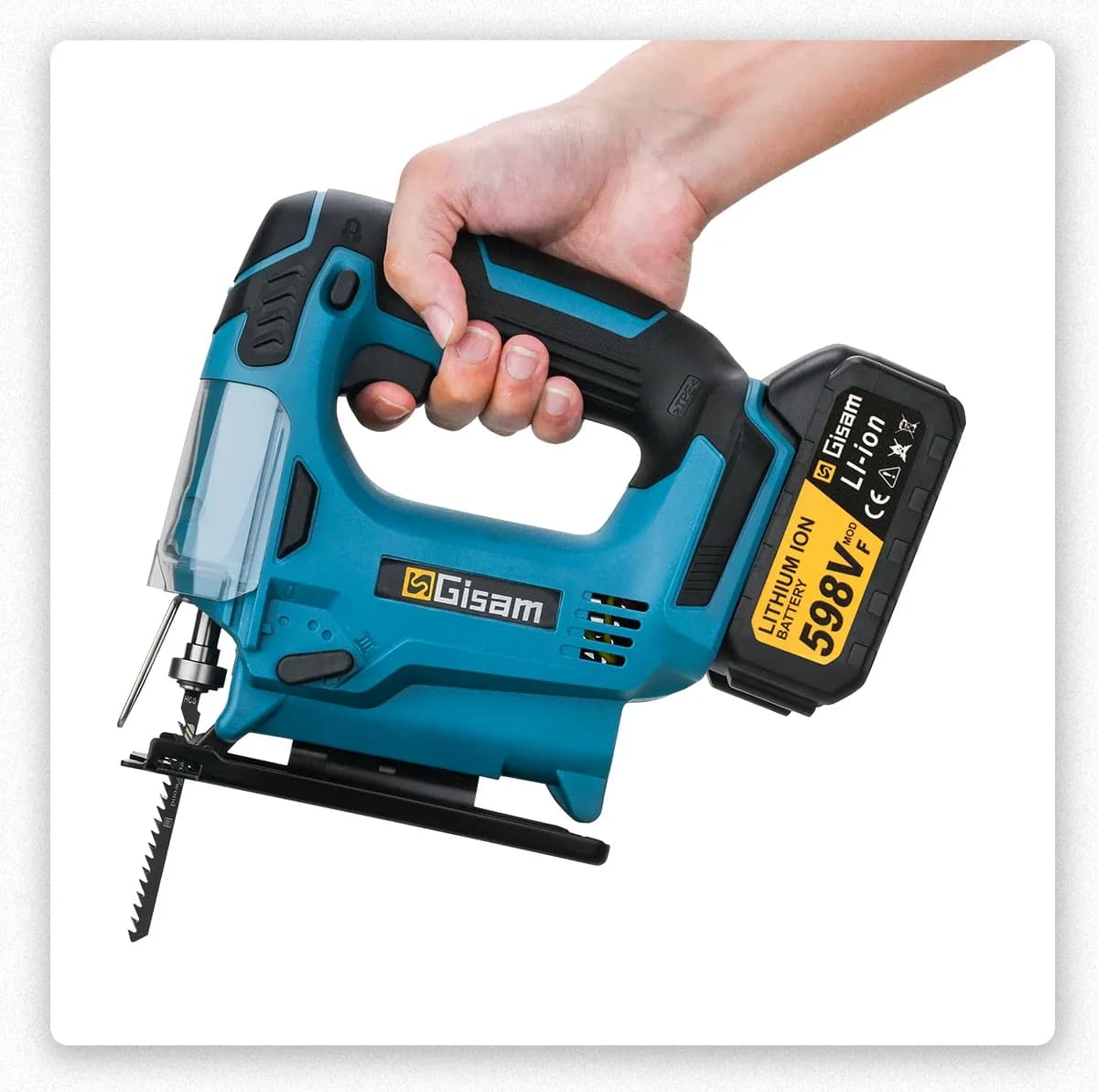
This tool solves a simple problem: you need a controllable wood cutter that can move with you, not drag a cable across a half-finished room. Gisam positions this model as a portable jig saw for Makita 18V battery users, which makes it a practical match for renovation crews and home workshops.
The appeal here is convenience without losing the feel of a real workshop tool. A brushless motor usually means smoother power delivery and less maintenance than brushed alternatives, so the saw should feel less strained during repeated cuts, which is exactly where cordless tools either earn their place or get left in the box.
What the 26mm cutting format suggests in use
The 26mm blade class points to a compact cutting platform rather than a heavy demolition saw, so this is better suited to plywood, boards, trim, and general woodworking than thick structural timber. In practice, that means more control around curves and cut-outs, where a lighter nose and shorter stroke can help keep the blade on line.
For users working on cabinets, shelving, or renovation trim, that balance matters more than headline power figures. A smaller-format jig saw is easier to guide through visible surfaces, and the reduced bulk can make overhead or one-handed positioning feel less tiring during longer sessions.
Makita 18V compatibility and what it changes

The biggest practical advantage is battery compatibility, because users already invested in Makita 18V packs can slot this into an existing tool system. That lowers clutter on the bench and keeps charging routines simple, which is one reason cordless ecosystem tools stay popular in the AliExpress UK tools niche.
Real customer feedback supports the idea that the cordless format is the main draw, with users praising the quiet operation and the freedom from cables. One caution is worth noting: a few reviews mention blade wobble or battery fit issues, so the experience may depend on battery condition and how carefully the saw is assembled and used.
Brushless motor behaviour on fine cuts
A brushless motor is most valuable when you want steadier speed under load, not just more theoretical power. That should help when the blade starts to bite into denser wood or when you slow down for a curved cut, where a less stable motor often turns a neat line into a rough edge.
For straight cuts, the user still needs to work deliberately, because jig saws are about guidance as much as force. Reviews suggest moving slowly improves precision, which is exactly the kind of practical tip that separates a tidy result from a wandering cut line.
Build quality, packaging, and the small details that matter

Users generally describe the saw as good value for the money, and the overall rating of 4.3 from 32 reviews points to a product that satisfies most buyers. The positive responses focus on cutting performance and convenience, while the weaker reports centre on packaging, accessory completeness, and a few fit-and-finish concerns.
That mix tells a useful story: this is a capable budget cordless saw, but it rewards careful inspection on arrival. Check the blade seat, battery latch, and accessory count before first use, because those are the areas where a low-cost power tool either feels ready for work or needs a quick adjustment first.
Where it fits best in a workshop
This Gisam saw makes the most sense for light-to-medium woodworking, renovation touch-ups, and jobs where portability beats bench-mounted precision. It is less convincing as a heavy-duty site saw, but that is not the role it appears to target.
If your work already revolves around Makita 18V batteries and you want a compact cutting tool that is easy to carry between rooms, this one lands in a useful middle ground. The next question is whether the included setup and fit are consistent enough to make that convenience dependable?