











Why Heimerdinger feels like a serious workshop brand
Heimerdinger has built a solid reputation in the AliExpress power-tool niche by focusing on brushless motors, practical body-only formats, and tools that fit real renovation workflows. The brand usually targets users who already own batteries and want compact, task-specific equipment rather than oversized kits.
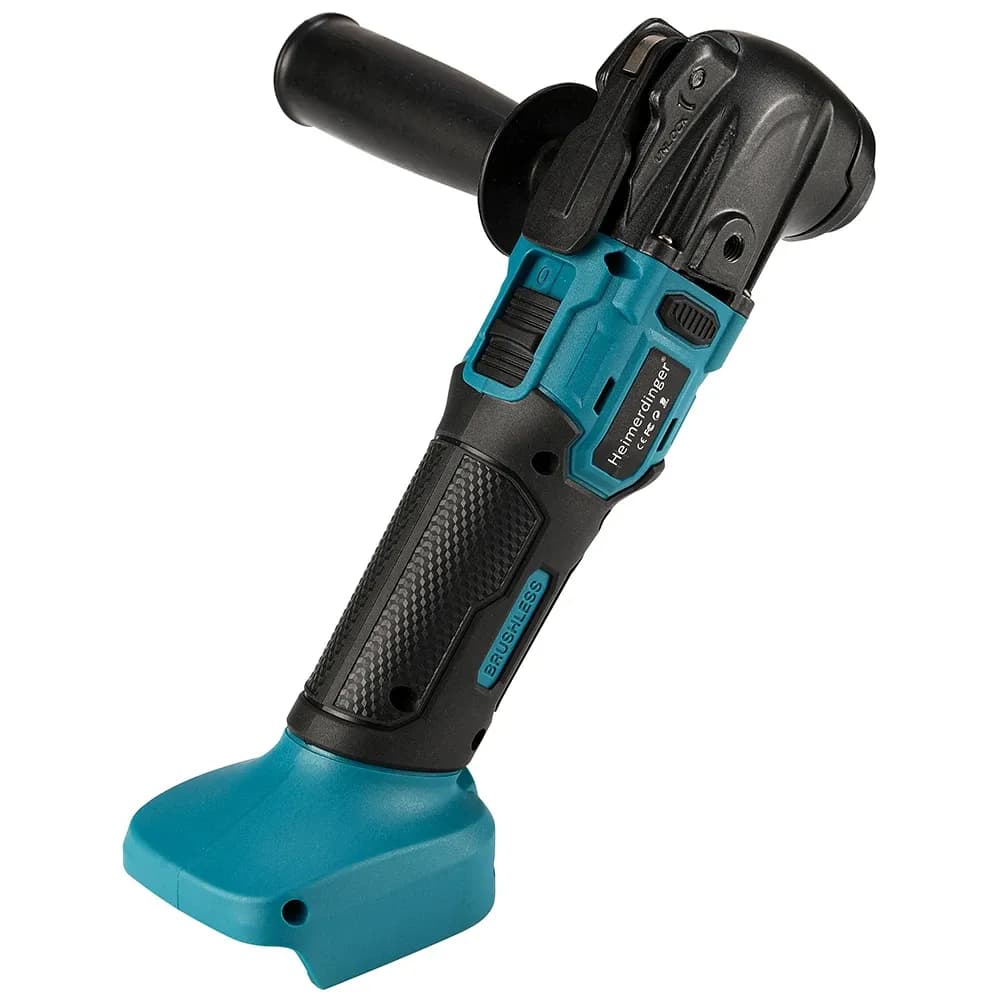
This oscillating tool follows that formula closely, pairing a brushless motor with a cordless layout and an auxiliary handle for better control. That combination matters when you are working on trim, grout, or old coatings, because the tool needs to stay steady rather than simply spin fast, so how does it behave in use?
6,000 to 20,000 opm: the speed range that changes the job
The 6,000 to 20,000 oscillations per minute range gives this tool enough flexibility for delicate sanding and more aggressive scraping. Lower speeds are useful when you want to avoid chewing into soft wood or painted surfaces, while the upper end helps the blade or pad bite into stubborn material more efficiently.
That spread is especially valuable on mixed renovation jobs, where one minute you are cleaning adhesive and the next you are smoothing a corner joint. A narrower-speed tool can feel limiting here, so the broader range is the real selling point, but the motor choice matters just as much.
Brushless motor performance in a compact body

The brushless motor should bring better efficiency and less wear than a brushed design, which is useful for a tool that may sit unused between projects and then face a long weekend of work. Users also tend to notice smoother acceleration and more consistent output under load, which helps when the blade meets dense material.
For renovation teams, that can translate into less fatigue and fewer stalls during repetitive jobs. It is not a substitute for a full-size saw or grinder, but it is far better suited to precision work in corners, along skirting boards, and around fittings, which is where oscillating tools earn their keep.
Auxiliary handle and 4-degree oscillation: why control matters
The 4-degree oscillation angle suggests a balance between cutting efficiency and control, making the tool less twitchy than ultra-aggressive alternatives. The auxiliary handle gives your second hand a stable anchor point, which is useful when sanding overhead or scraping at awkward angles.
That extra grip can make a bigger difference than raw power in real use, especially on a cordless tool where balance and handling matter. If you have ever fought a vibrating multitool that feels hard to guide, this setup should sound familiar in a better way, and the included accessories determine how far it can go.
Where this tool fits in a renovation kit

This model is best viewed as a detail tool for renovation, not a primary cutting machine. It makes sense for cutting plasterboard openings, removing sealant, trimming flush edges, or sanding tight spots where a larger sander cannot reach.
Customers describe it as convenient and functional, which matches the product’s design brief rather than promising anything dramatic. For workshop owners or DIY users who already run a battery ecosystem, the cordless format is the main convenience, and the next question is whether the trade-offs are worth it.
What to check before you add it to your cart
The listing does not specify battery capacity or included accessories, so the final experience will depend heavily on the battery platform you use and the blades or pads you fit. That means this is most attractive to buyers who already have compatible batteries and want a lighter, more portable body.
Because it is a body-focused tool, the value comes from the motor, handling, and speed range rather than a large bundle. If your work revolves around scraping, sanding, and small renovation corrections, this is the kind of multitool that can save time without taking over the bench, and that is where it becomes interesting.