












A practical sander for edge work and flat-panel prep
This Prostormer sheet sander solves a common workshop problem: getting into corners and along edges without leaving obvious swirl marks or slowing down on small jobs. With a 187x90mm pad and 12,000 rpm no-load speed, it is shaped for controlled surface finishing rather than aggressive stock removal.
Prostormer has built a solid reputation in the AliExpress niche for straightforward power tools that focus on usable specs instead of marketing noise. That matters here, because this model looks designed for home DIY users who want a dependable mains-powered sander that feels familiar in the hand and does not overcomplicate the job.
187x90mm pad size: why it matters on real projects
The sanding pad is large enough to cover cabinet doors, shelves, and trim pieces efficiently, yet narrow enough to work close to corners and frame edges. For carpentry, that balance is more useful than a bulky random orbital sander when the task is detail finishing rather than broad paint removal.
Users looking to smooth timber before varnish or paint will notice the benefit quickly, because the footprint helps keep the sanding pattern even across smaller panels. It is also easier to control on vertical surfaces, which makes it a sensible choice for joinery touch-ups and furniture restoration.
12,000 rpm and brushed AC motor: steady rather than flashy
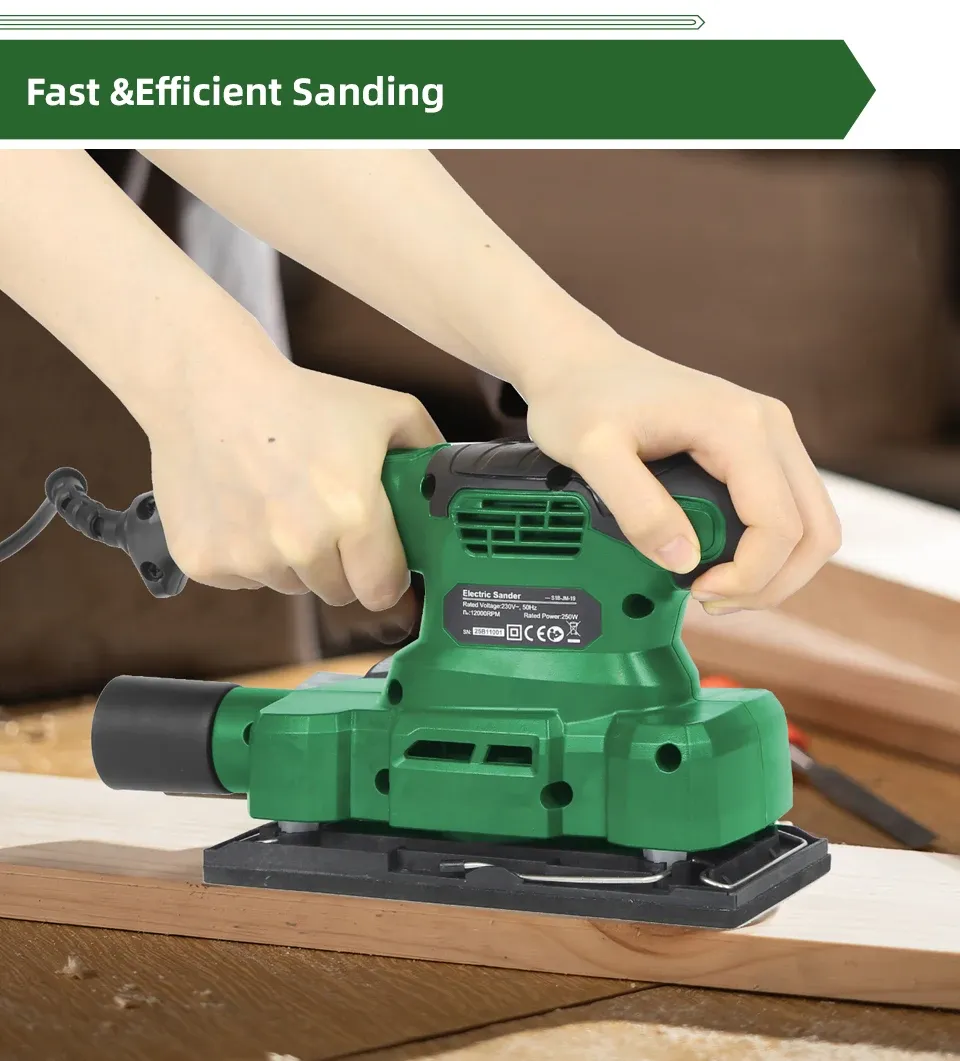
The 250W brushed motor is not built for heavy-duty site grinding, but it does provide enough pace for sanding wood, preparing filler, and refining edges. The fixed-speed design keeps operation simple, which can be a plus if you want a tool that behaves consistently every time it is switched on.
Without variable speed, the machine is less flexible than higher-end sanders for delicate finishes or mixed materials. Still, the 230V AC supply and 50Hz rating make it a practical plug-in tool for workshop use, especially when consistent power is more important than cordless convenience.
1.44kg weight: easy to guide, not tiring to hold
At 1.44kg, the sander sits in a manageable range for extended DIY sessions and overhead touch-ups. That weight helps the pad stay planted on the workpiece, so the tool feels more stable than ultra-light models that can skate across softer wood.
The trade-off is that it is not a featherweight finishing tool, so long sanding runs on large furniture panels may still feel repetitive. In practice, the balance should suit home workshops and occasional users who want control, decent reach, and a familiar corded setup, so what does that mean for dust and finish quality?
What customers suggest about performance

Real customer feedback is strongly positive, with a 5/5 average from 17 reviews, and users repeatedly point to strong sanding action and good value. One common note is that it works well with a vacuum cleaner, which is useful because dust control often decides whether a cheap sander feels professional or messy.
That kind of feedback fits the spec sheet: this is not a premium finishing system, but a capable sheet sander that appears to do the core job well. For anyone comparing it with a random orbital model, the key difference is the shape and handling, not raw sanding glamour.
Best-fit use cases
- Cabinet edges and shelf corners
- Furniture prep before paint or lacquer
- Light carpentry smoothing
- DIY polishing and surface refinement
- Workshop sanding where mains power is available
If your projects are mostly flat timber, frames, and detail work, this format makes sense; if you need fast paint stripping on large boards, a more aggressive sander may suit you better. That distinction is where the Prostormer earns its place in a home toolkit, and it explains why the reviews stay so positive.