









Compact power for detail work
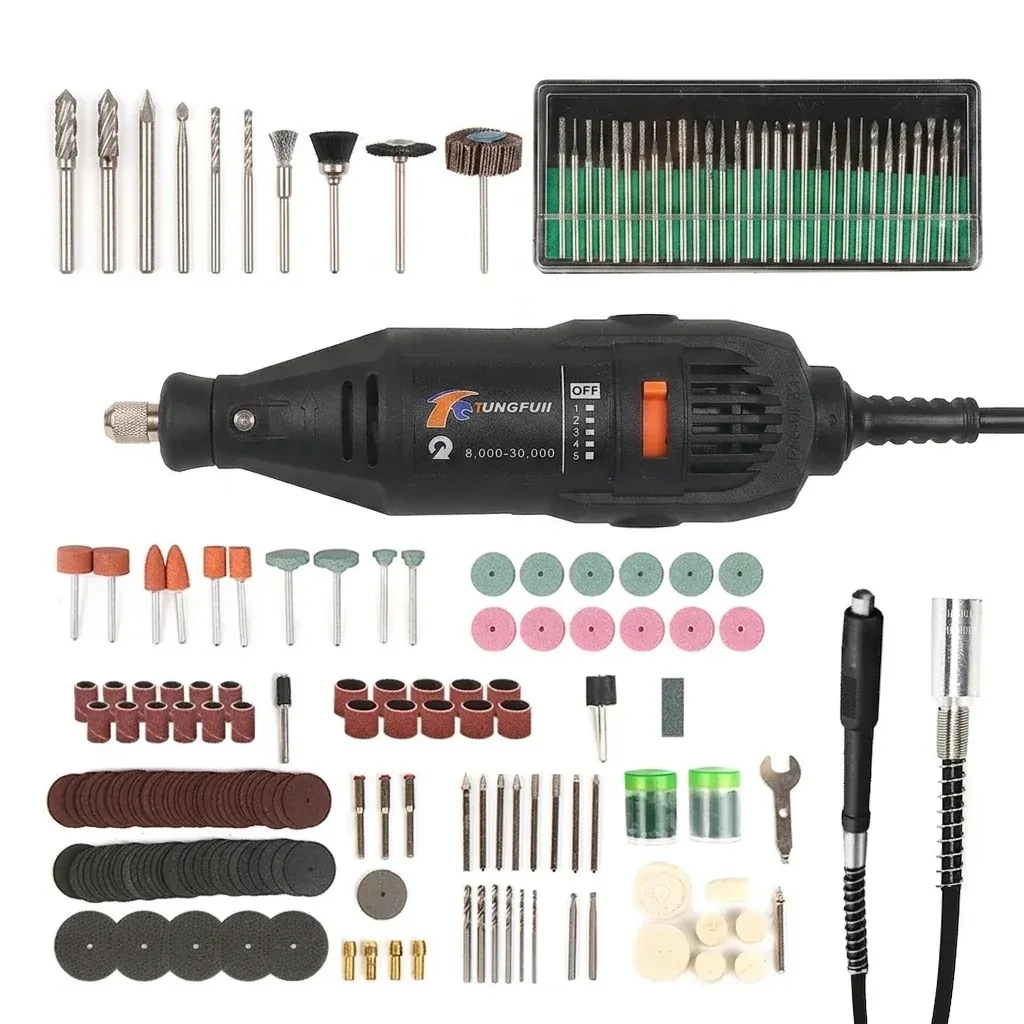
This mini rotary drill solves a common workshop problem: you need controlled speed in a small tool, not the bulk of a full-size drill. With a 130W brushed motor and a top speed of 30,000rpm, it is built for fine carving, polishing, and trimming where precision matters more than brute force.
The 220V AC design keeps output consistent, so the tool does not fade the way some entry-level cordless minis can when the battery drops. For AliExpress UK readers who work on hobby projects, circuit boards, resin, wood, or soft metal, that stable power is the real advantage, and the accessory ecosystem is where it becomes more interesting.
30,000rpm in practice: what that speed feels like
At the highest setting, the bit moves fast enough for smooth sanding and light grinding, which helps reduce chatter on delicate surfaces. Users often describe the motor as smooth for the class, and that matters because vibration is what turns small jobs into frustrating ones.
The five-speed control mentioned in the original listing gives the tool more range than a single-speed mini drill, especially when switching from engraving to polishing. Lower speeds are better for plastics and soft materials, while the higher range suits drilling small holes up to 3.2mm, so the same body can cover several tasks without feeling over-specialised.
Where the 3.2mm drilling limit makes sense

The maximum drilling diameter of 3.2mm shows this is a detail tool, not a construction drill. That limit is useful for model-making, jewellery work, and electronics cases, where small clean holes are more important than deep torque.
If you expect it to behave like a bench drill or a heavy rotary hammer, it will disappoint, but that is not the right comparison. A better benchmark is a compact Dremel-style tool, and the real value is in how easily it handles engraving, cleaning rust spots, polishing edges, and sharpening small parts.
Accessory-ready for a wider workshop role
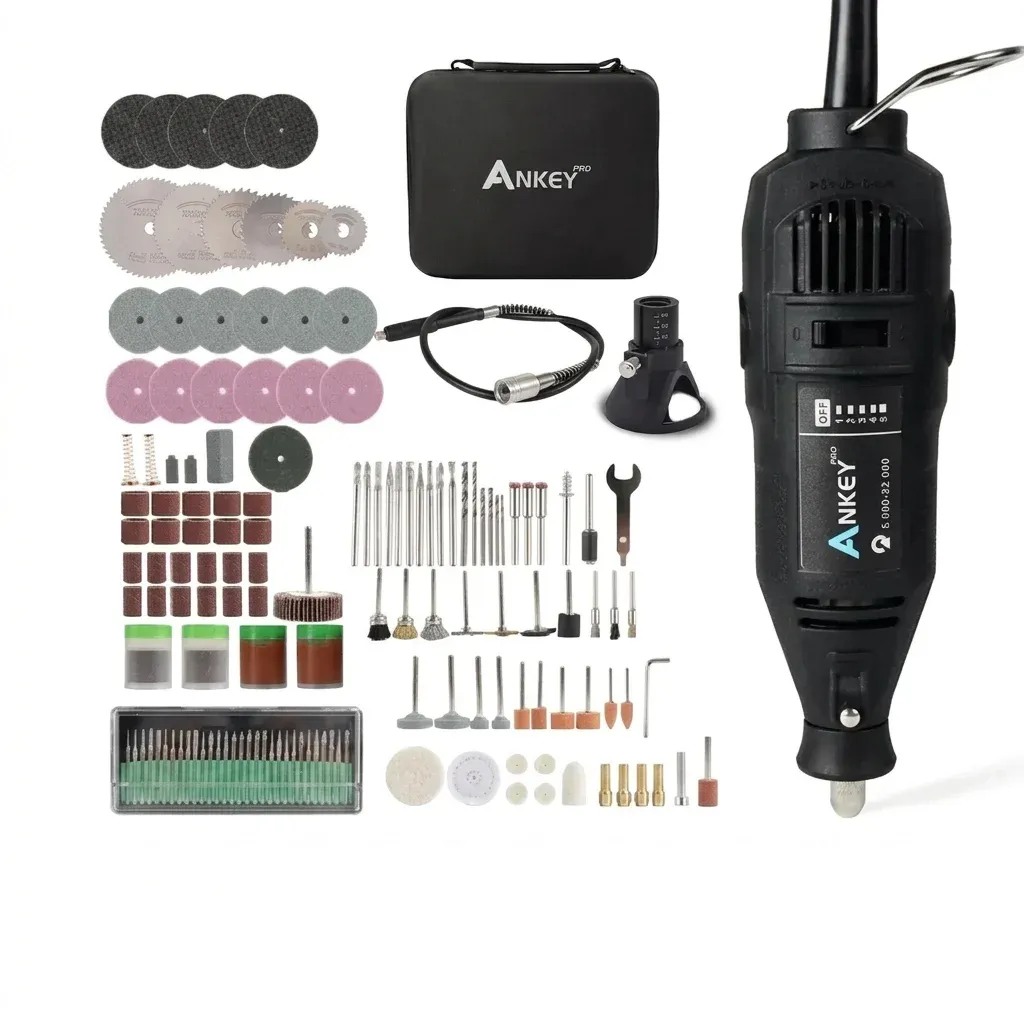
The listing points to bundled accessories, and that is important because rotary tools become far more useful once the consumables are included. Users note that the kit is compatible with other Dremel-style accessories, which extends its life beyond the first set of bits and discs.
That compatibility also lowers the learning curve for new DIY users, since standard bits are easier to source and swap in. In a tool class where cheap proprietary fittings can be a hidden weakness, standardisation is a practical strength, and it is one reason this model feels more usable than many no-name mini drills.
Who will get the most from it

This is best suited to home DIY users who want a small mains tool for carving, grinding, polishing, sanding, and light cutting. It is also a sensible pick for hobbyists who prefer uninterrupted runtime over cordless convenience, especially on a bench where the cable is not a problem.
Real customer feedback is broadly supportive, with a 4.7/5 average from 54 reviews and repeated praise for smooth operation, accessory value, and solid build. That pattern suggests the tool meets expectations where it counts, though the lightweight format still defines its limits, so the next question is what those limits are in daily use?
What to watch before you choose it
The brushed motor is a cost-saving choice, which helps explain the low entry point, but it usually means more wear over time than a brushless design. The 1.3 weight listing also suggests it is light enough for handheld detail work, yet not featherweight enough to ignore cable drag during long sessions.
Because it runs on 220V AC, it suits fixed workshop use better than outdoor jobs with no socket nearby. If your projects live on a desk, bench, or garage table, this setup is practical; if you need mobility, a cordless rotary tool would be the better match, and that trade-off is the key decision here.