

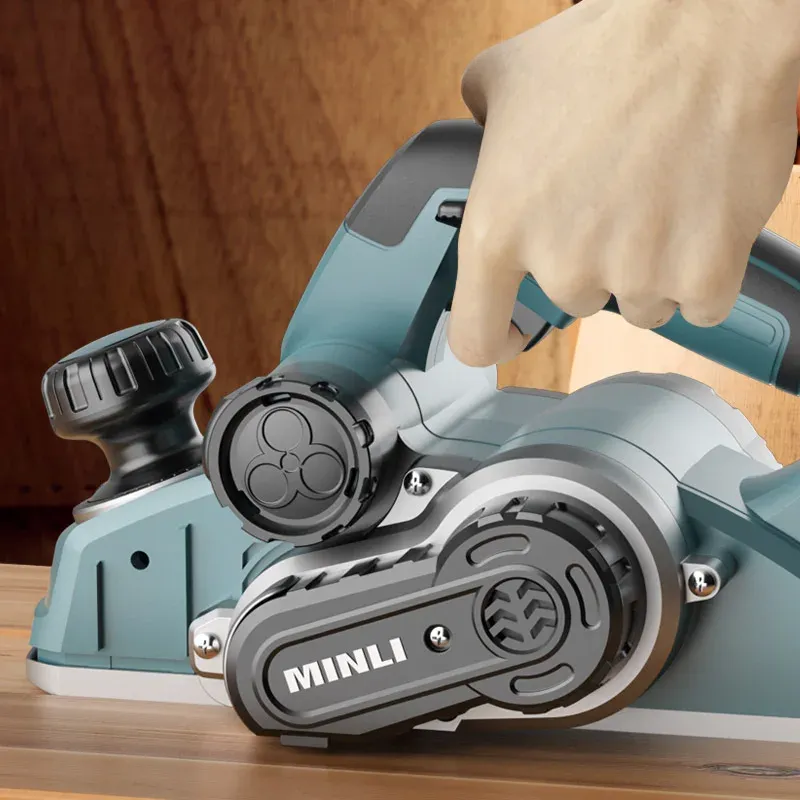









Fast stock removal for rough timber and door edges
This planer solves a familiar workshop problem: uneven boards that need to be brought back into shape without sanding for hours. With a 1050W motor and a 15,000 rpm no-load speed, it is aimed at quick surface correction rather than delicate finishing.
The 82mm knife width covers standard boards efficiently, so each pass removes a useful strip of material instead of nibbling away slowly. That makes it more suitable for renovation teams and DIY users who need visible progress in minutes, not a long polishing session.
What the 4mm planing depth means in real use
A maximum planing depth of 4mm gives this tool enough bite for warped timber, proud joints, and doors that need minor trimming. In practice, that depth is generous for a handheld electric planer, but it also means the user needs a steady grip to avoid overcutting.
For lighter work, taking shallower passes will leave a cleaner surface and reduce tear-out on softer wood. If you are used to compact cordless planers, this corded format feels more consistent under load, which is the next point worth considering.
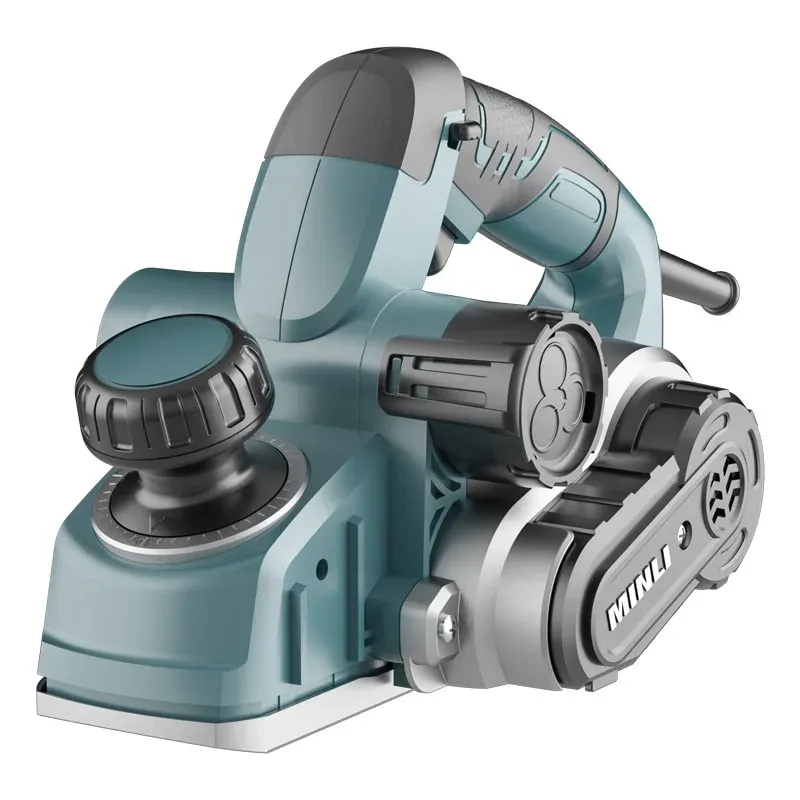
Why the 220V corded design suits workshop jobs
The 220V AC power supply keeps output stable, so the cutter does not rely on battery charge or drop off during longer sessions. That is useful on site or in a home workshop where you may be planing several boards in a row and want the machine to keep its pace.
At 3.64kg, it has enough mass to sit firmly on the workpiece, which helps when flattening timber and reduces chatter. Users who prefer ultra-light tools may notice the weight, but that same heft can improve control on tougher material.
Build details that matter more than the badge
The listing does not name a brand, so the value here comes from the specification sheet rather than a premium label. CE, FCC, and KC certification suggest the unit is positioned for regulated markets, which is reassuring for a tool in this power range.
According to users of similar planer models, the real test is whether the sole stays flat and the motor holds speed under pressure. If those two points are handled well, a no-brand planer can still be a smart workshop addition, especially at this level of output.
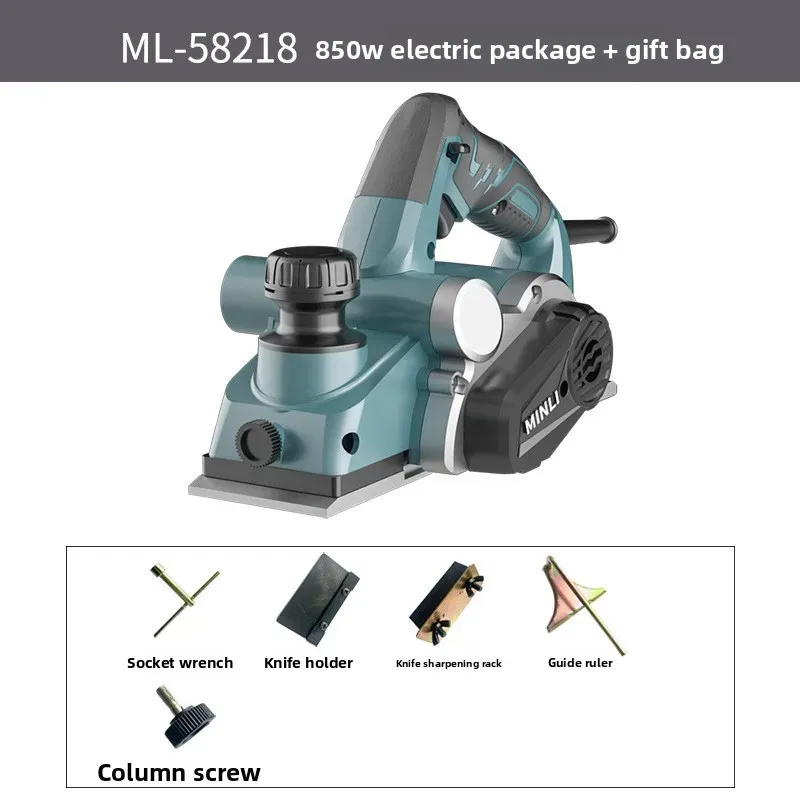
Best fit for renovation crews and practical DIY work
This is not the planer for furniture-grade finishing straight out of the box, and it is not trying to be. It is better suited to door adjustment, beam cleanup, rough carpentry, and fast levelling where speed matters more than a glass-smooth final pass.
For users comparing it with battery-powered alternatives, the main advantage is uninterrupted runtime and stronger consistency on dense timber. The question then becomes whether you need a portable jobsite tool or a bench-style setup for more controlled work.
- 1050W motor for decisive material removal
- 82mm cutting width for standard boards and edges
- Up to 4mm planing depth for correction work
- 15,000 rpm no-load speed for efficient passes
- 3.64kg body for steadier contact on timber
- 220V AC power for continuous workshop use
- CE, FCC, and KC certified listing