








Workshop lifting that solves the slow-jack problem
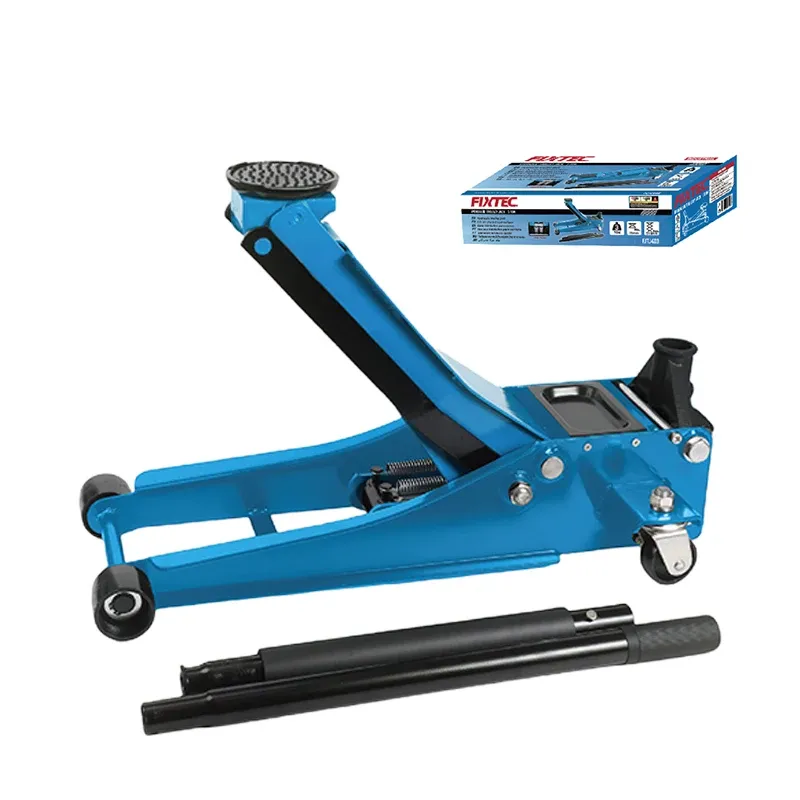
A floor jack earns its place when it reduces effort at the exact moment a vehicle needs to come off the ground. This FIXTEC unit is aimed at that job, with a 3-ton capacity that suits most passenger cars, SUVs, and many light workshop tasks.
The dual-pump hydraulic action is the practical detail here, because it should bring the saddle up faster than a basic single-pump design. For garages that value speed, that can mean less time cranking and more time working under the vehicle.
3-ton capacity in real workshop use
The stated 3-ton load rating gives this jack enough headroom for heavier road cars and many estate or 4x4 applications, as long as the lift points are correct. That makes it more versatile than lightweight emergency jacks, which are usually better left for roadside use only.
Users who move between home garage work and small automotive business tasks will likely appreciate the broader margin of safety this rating provides. It is the kind of spec that matters when the vehicle is loaded, fitted with larger wheels, or simply heavier than average.
Low 3-inch starting height for tighter clearances

The minimum height of 3 inches is useful when a car sits low or has limited ground clearance. It helps the jack slide under vehicles that would challenge bulkier trolley designs, which is a real advantage for modern saloons and lowered project cars.
That low entry point does not remove the need to check clearance around side skirts, splitters, or undertrays. It does, however, make the jack more adaptable than taller workshop models that can feel awkward on performance-oriented vehicles.
Steel construction and workshop durability
FIXTEC lists steel and stainless steel in the material data, which suggests a build focused on rigidity rather than lightweight portability. In practice, that usually means a more stable feel under load and better resistance to the knocks that come with garage use.
The trade-off is predictable: a steel trolley jack is not meant to be featherweight. If your priority is a tool that feels planted on the floor and behaves like workshop equipment, this construction is part of the appeal.
Dual-pump handling and what it changes
The manual handle and hydraulic actuator combination keeps the tool straightforward, with no electric dependency and no battery maintenance. Dual-pump systems are valued because they can reduce the number of strokes needed to reach the vehicle, which is noticeable during repeated lifting sessions.

For repair bays, tyre changes, and brake work, that quicker rhythm can make a real difference across a full day. It is a small mechanical improvement, but one that becomes obvious once you compare it with slower budget jacks.
Who this FIXTEC jack suits best
This is a sensible fit for home mechanics, independent workshops, and anyone who wants a more serious trolley jack than the compact emergency type. According to users of similar FIXTEC workshop tools, the brand tends to attract buyers who want dependable, no-frills equipment rather than flashy extras.
If you already use axle stands, wheel chocks, and a proper lifting routine, the jack slots neatly into that workflow. The next question is whether its workshop-focused design justifies the footprint and weight on your garage floor.
- 3-ton lifting capacity for common workshop vehicles
- Low 3-inch minimum height for reduced-clearance cars
- Dual-pump hydraulic action for faster lifting cycles
- Steel construction for a planted, workshop-grade feel
- Manual operation with no charging or power supply needed
- 1-year warranty for added ownership confidence